Why You Should Never Quit After Getting Scammed as a Dev
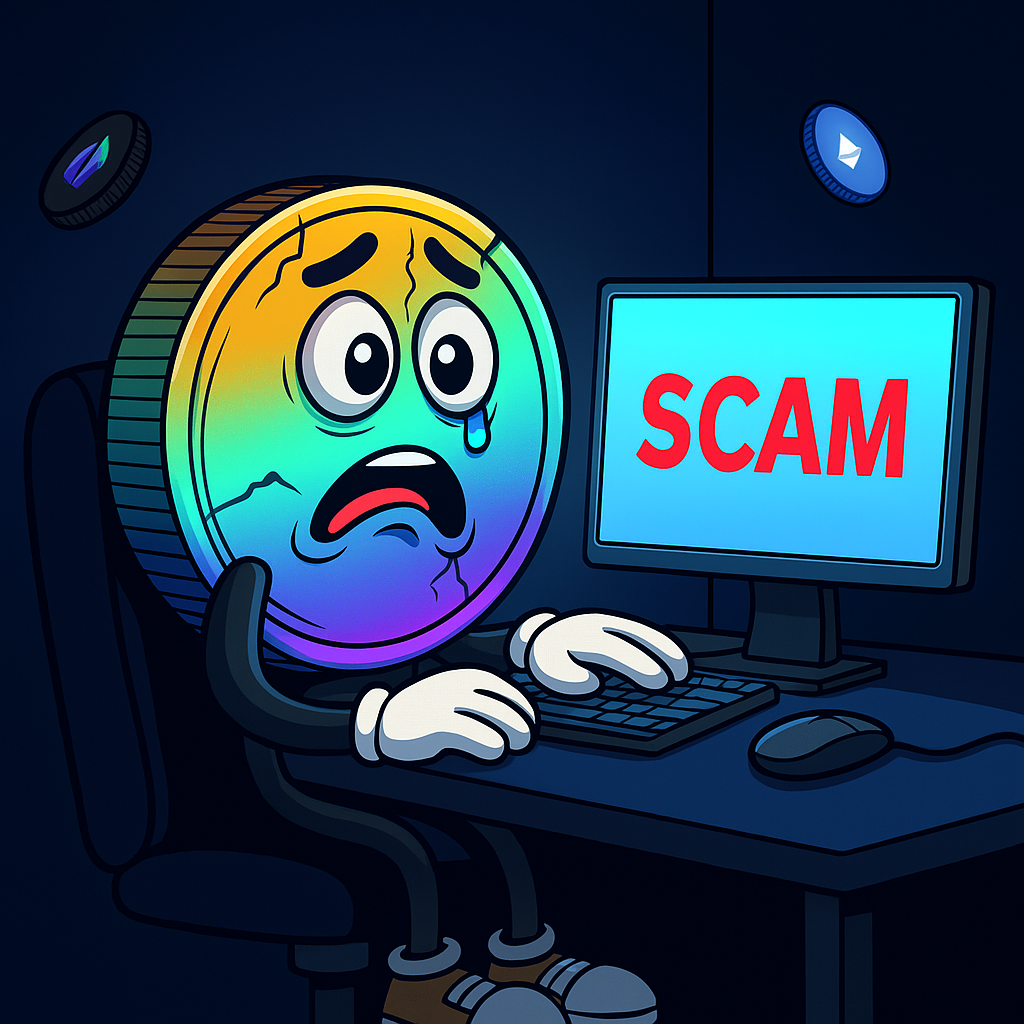
Let’s be honest nothing hits harder than realizing you’ve just been scammed. You stare at the screen in disbelief, replaying the messages, the transactions, the “proof,” the fake screenshots, the sweet promises.
Why You Should Never Quit After Getting Scammed as a Dev
Let’s be honest—nothing hits harder than realizing you’ve just been scammed.
You stare at the screen in disbelief, replaying the messages, refreshing the browser, disconnecting your wallet, reviewing the transactions, the “proof,” the fake screenshots, the sweet promises.
And then it hits you... you’ve been played.
If you’re a developer, community member, retail investor, even a seasoned professional in the crypto space, this moment comes sooner or later. Sometimes it’s a shady mod. Sometimes it’s a fake K.O.L. influencer. Sometimes it’s a “partner project” that disappears overnight. But what defines you isn’t the scam, it’s what you do after.
The Breaking Point
When I first got scammed as a dev, it felt like the entire world collapsed in a single click. Brokecoin, went from $400,000+ marketcap all the way down to under $40,000 in a single day.
Money was gone, trust was shattered, and the guilt hit harder than the loss itself.
You start blaming yourself:
“I should’ve known better.”
“How could I fall for that?”
“What will my community think?”
But here’s the truth, every real project gets burned at some point.
In fact, the only ones who don’t are the ones who never risk anything, never build anything, and never put themselves out there.
If you’ve been scammed, that means you tried.
And trying in crypto takes guts.
The Fire That Follows
Here’s the crazy thing about pain: it can either destroy you or forge you.
After I got scammed, I could’ve quit.
It would have been "typical" or even expected of a Dev, "this cycle" which I did.
People would’ve said, “Yeah, that’s how crypto goes.”
But I didn’t.
Because every failure was fuel. Every betrayal became a lesson.
And every sleepless night turned into something I could teach the next person.
You start to realize that every “L” you take is actually an experience tax.
Some may call it cope, and it shouldn't be normalized in this space, but it does happen sadly.
So since you paid for the lesson. You now own it.
Lessons from the Trenches
Here’s what I learned, raw and unfiltered, from being scammed as a dev:
Scammers target everybody, but they give extra effort when they target the kind.
They go after people who believe in something. The ones who want to build.
Don’t lose your kindness, just learn to protect it better.
New projects get targeted extra hard.
Professional scammers are emotionally intelligent.
They mirror your values, your language, your passion. They “agree” with your goals.
If someone’s trying too hard to sound like your twin, pause. That’s a mask, not a mirror.
Don’t outsource your peace of mind.
If someone says, “I’ll handle your community,” or “I’ll take care of your marketing, you need to verify, research, and then trust, while keeping a close eye on them.
You can’t automate integrity.
Transparency builds immunity.
When I openly told my community about what happened, I expected backlash.
Instead, I got respect. People don’t expect perfection, they expect honesty.
You’ll never grow if you quit early.
K.O.L. and fake influencers have tends of thousands of bot followers, want 1-4% of your supply, and will ultimately be a major problem later on.
When people say they're "never selling" or "diamond handed" don't be prepared to find out that words mean nothing. No matter how much you produce.
The best devs, leaders, and founders I know all have one thing in common: they’ve been scammed, rugged, or betrayed, and still kept going.
The Rebuild Phase
After the chaos, you reach a crossroads:
Do you walk away quietly, or do you rebuild loudly?
I chose to rebuild.
Not for pride, not for revenge, but to prove that good people can survive in bad spaces.
I also wanted to fulfill promises I made to the community, and not leave those who were harmed, in a worse place. That sense of duty and responsibility, is what I wanted to be my legacy.
That’s what Brokecoin became, a living reminder that no amount of scams or setbacks can stop someone who refuses to give up.
When the dust settled, I realized something powerful:
“They can steal your tokens, but not your vision.”
If you’ve ever been scammed as a dev, hold onto that.
Because the moment you start building again, you’ve already won.
To the Devs Reading This
If you’re licking your wounds right now, wondering whether to continue,
don’t quit.
That burn you feel? That’s the cost of admission to the real world of building.
You’ll never forget it, but you’ll also never fall for the same trick twice.
In time, you’ll be the one warning others, teaching others, protecting others.
And when you look back, you’ll realize the scam didn’t break you, it built you.
The Brokecoin Mantra
At Brokecoin, we live by three core values:
"Never Give Up."
"Never Give In."
"Never CTO" (Community Take Over).
Because quitting is easy.
But surviving, and thriving, after being scammed?
That’s legacy work.
Final Thoughts
Crypto is wild, unpredictable, and often unforgiving.
But for every scammer out there, there’s a builder fighting twice as hard to do things right.
So, to all the devs who’ve been scammed, tricked, rugged, or doubted...
this one’s for you.
You’re still here.
You’re still building.
And that means you’re already winning.