Web2 vs Web3: What’s the Difference?
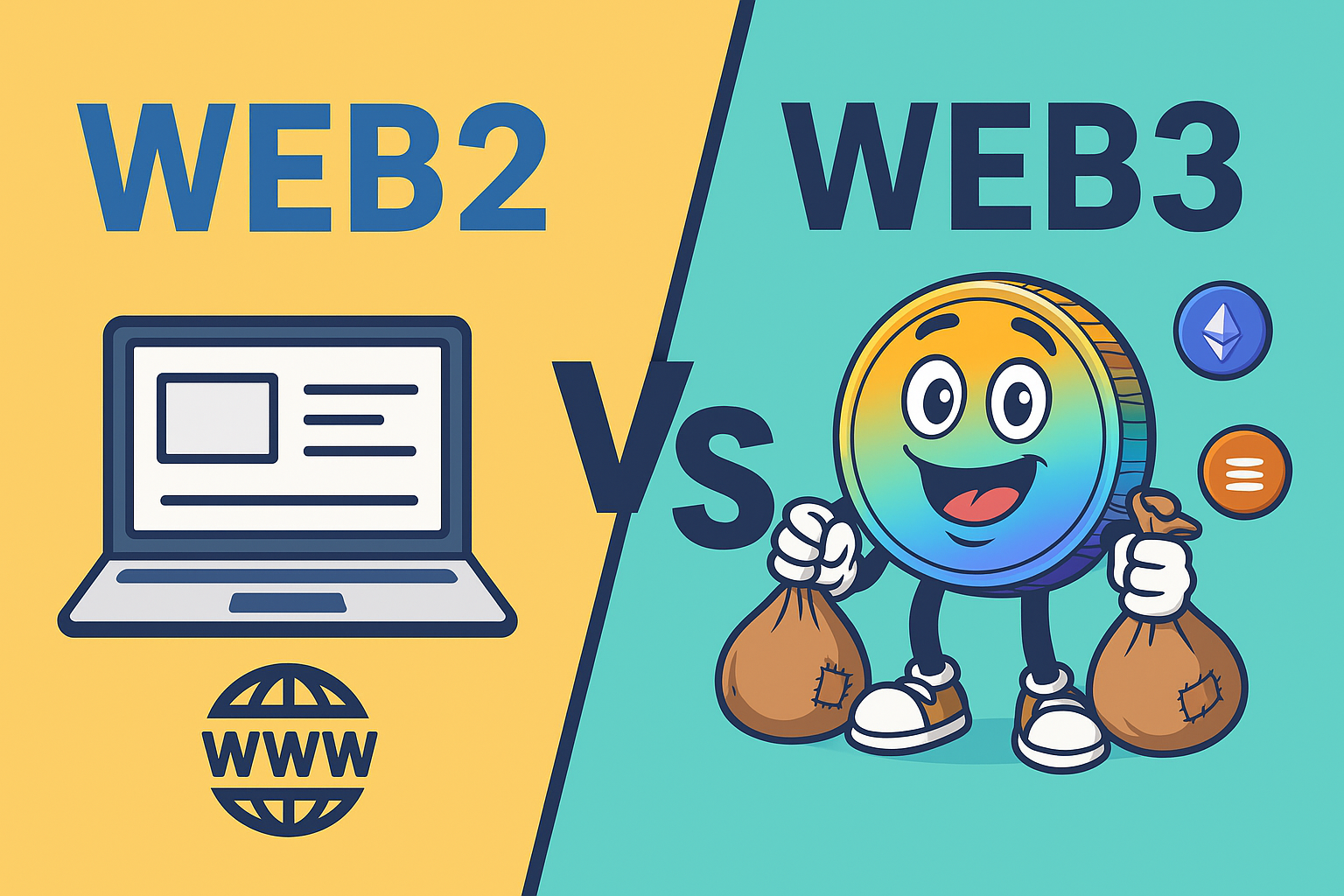
You will often hear people talk about “Web2” and “Web3” as if they are two different versions of the internet. In simple terms, Web2 is the internet you already use every day. Web3 is a newer idea that adds blockchains, tokens, and user ownership. Understanding Web2 vs Web3 helps you see what might actually change for you as a beginner.
What Is Web2?
Web2 is the current internet built around big platforms and user content.
In Web2:
You use apps like social media, streaming, and shopping sites.
Companies own the platforms, servers, and main databases.
You create content, but the platform controls access and can change rules at any time.
Most of today’s apps use your email, passwords, and personal data. You log in, accept terms, and trust the company with your information.
What Is Web3?
Web3 is a vision for an internet that uses blockchains and crypto to give users more control and ownership.
Key ideas in Web3:
Data and assets live on blockchains, not only on company servers.
Users connect with crypto wallets instead of just email and passwords.
Apps called dApps (decentralized applications) run on smart contracts, which are programs on a blockchain.
In Web3, you might own tokens or NFTs that represent in-app items, access rights, or voting power in a project.
Web2 vs Web3: What Changes for Users?
Ownership
Web2: You “use” items in a game or app, but the company can delete or lock your account.
Web3: You can hold items, coins, or NFTs in your own wallet. You keep them even if one app shuts down.
Login and identity
Web2: Many separate logins and passwords. Platforms may track your activity.
Web3: One wallet can connect to many dApps. You choose what to share, but you must protect your keys.
Money and rewards
Web2: Platforms earn from ads, fees, and data. Users may get limited rewards.
Web3: Some projects share tokens or fees with users or community members. This can create new incentives, but also adds risk and speculation.
Benefits and Risks
Possible benefits
More direct ownership of digital items.
New ways to earn or participate in communities.
Open data that any developer can build on.
Key risks
Scams and rug pulls are common.
Complexity: wallets, gas fees, and tokens can be confusing.
Losing your keys can mean losing access permanently.
Many Web3 ideas are still experimental and may fail.
Takeaway
Web2 is the internet of big platforms and user content. Web3 tries to add blockchains, user ownership, and tokens on top. Some of this may reshape how we use apps in the future, but it also adds new risks and responsibilities. If you explore Web3, move slowly, learn how wallets and security work, and treat every new project with caution and questions.
Not financial advice. Educational purposes only.