What Is Slippage in Crypto?
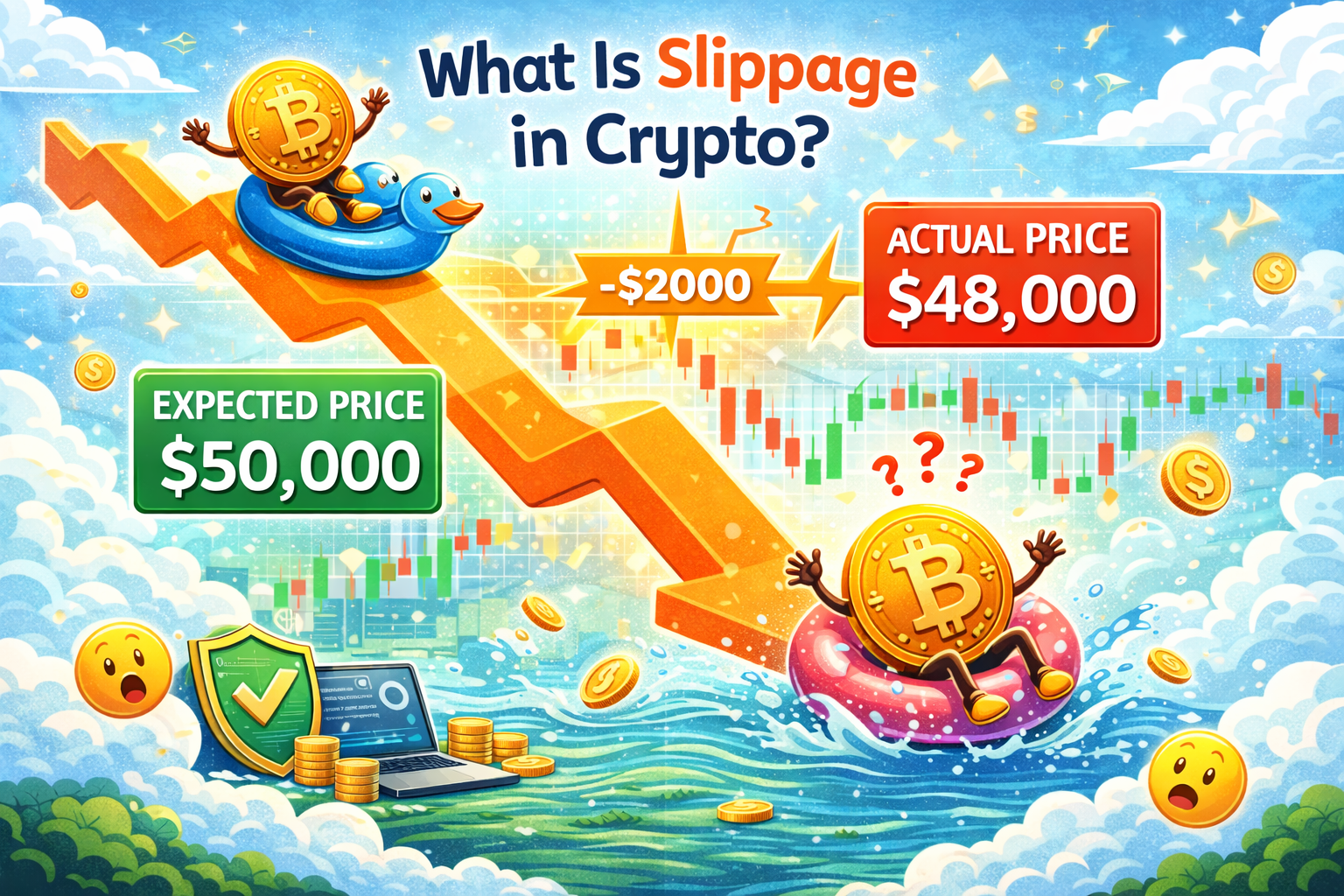
You might click “buy” at one price and see your trade fill at a different price. That small difference is called slippage. Understanding what slippage is in crypto helps you avoid surprises and understand why you sometimes pay more (or receive less) than expected.
Simple Definition of Slippage
Slippage is the difference between the price you see when you place a trade and the price you actually get when the trade goes through.
It can be:
Positive slippage: You get a better price than expected.
Negative slippage: You get a worse price than expected.
In fast or thin markets, negative slippage is more common and can add hidden costs to your trades.
Why Slippage Happens
Slippage usually happens because prices are moving or the market is not very deep.
Key causes:
Volatility: Prices change quickly between the time you click “confirm” and when the trade is executed.
Low liquidity: There are not enough buy or sell orders near the current price, so your trade “eats through” the order book.
Large order size: A big trade can move the price against you, especially on smaller coins.
On decentralized exchanges (DEXs) that use liquidity pools, your trade can shift the balance of tokens in the pool. This changes the price you get, which shows up as slippage or “price impact.”
Slippage on CEXs vs DEXs
On centralized exchanges (CEXs), slippage depends on:
How many orders are in the order book.
The spread (gap between the best buy and best sell price).
How large your order is compared to normal volume.
On DEXs, slippage depends more on:
The size of the liquidity pool.
How much your trade changes the pool balance.
Network speed and how many other people are trading at the same time.
Many DEXs show “price impact” and let you set a slippage tolerance, which is the maximum slippage you are willing to accept before the trade is canceled.
How to Manage Slippage
You cannot remove slippage completely, but you can reduce it.
Common ways:
Trade coins with higher liquidity and volume.
Avoid trading during extreme volatility or big news events.
Use limit orders on CEXs, which only fill at your chosen price or better.
Set a reasonable slippage tolerance on DEXs so your trade cancels if the price moves too much.
Break very large trades into smaller pieces.
These steps can help you control your effective cost and avoid unexpected losses from poor fills.
Takeaway
Slippage is the hidden gap between the price you expect and the price you actually get. It grows when markets are thin, volatile, or you place large trades. Before trading, check liquidity, consider order type, and use tools like slippage tolerance to protect yourself from unpleasant surprises.
Not financial advice. Educational purposes only.