Burnout Warning Signs and Early Course Corrections
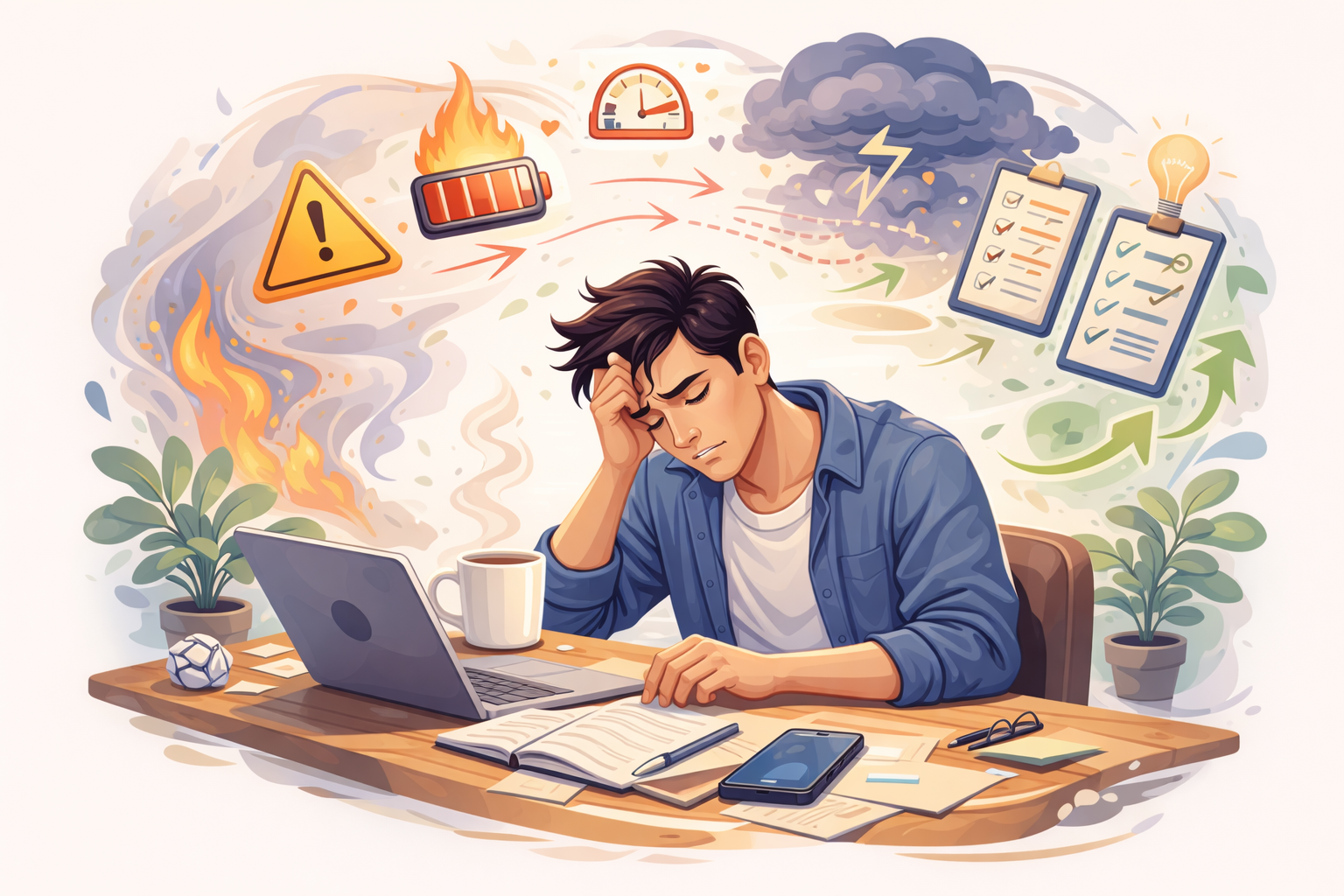
Burnout warning signs often show up quietly at first. You may feel more tired, less patient, or less interested in things you used to care about. Paying attention to these early signals can help you make small course corrections before you feel completely drained.
What Is Burnout in Everyday Life?
In plain language, burnout is deep, ongoing exhaustion from long-term stress and pressure.
It is more than just a “busy week.” It is a steady leak of energy over time.
Everyday burnout can look like:
Feeling “used up” at the end of most days
Dreading tasks that once felt normal
Feeling numb, cynical, or disconnected from your work or responsibilities
You may still be doing what needs to be done, but it feels heavier and harder than before.
Early Burnout Warning Signs
Early warning signs are like the “yellow lights” on your dashboard:
Constant tiredness, even after a decent night’s sleep
More irritability or snapping at small things
Trouble focusing or finishing tasks you used to handle more easily
Pulling away from friends, coworkers, or family
Losing interest in hobbies or activities that once felt enjoyable
Noticing these signs does not mean you have to panic. It simply means your system needs some changes and support.
Small Course Corrections You Can Try
Early course corrections are small shifts that can lower pressure and refill your energy tank:
Lighten the load where you can. See if there is one task you can delay, delegate, or drop this week.
Add tiny recovery moments. Take a few minutes between tasks to stretch, breathe, or step outside.
Set “good enough” standards. Choose one or two areas for high effort and allow “good enough” in others.
Protect basic needs. Aim for regular meals, some movement, and a simple wind-down routine at night, even if they are short.
Reach out. Share how you are feeling with someone you trust and, if you choose, ask for practical help or small adjustments.
These steps do not fix everything, but they can slow the drain and help you feel a bit more steady.
Checking In With Yourself Regularly
A simple weekly check-in can help you spot burnout warning signs earlier:
Ask, “How tired am I on most days this week?”
Notice any changes in mood, focus, or interest.
Choose one small course correction for the coming week, not ten.
Over time, these check-ins can become a safety net for your energy and well-being.
Takeaway
Burnout warning signs often show up as steady tiredness, irritability, and loss of interest, not just one bad day. Early course corrections are small, realistic changes that reduce pressure and add pockets of recovery. Start by noticing your own signals with kindness and choosing one gentle shift you can make this week.
General information only. Not medical, mental health, or professional advice.