Designing a Distraction-Free Workspace
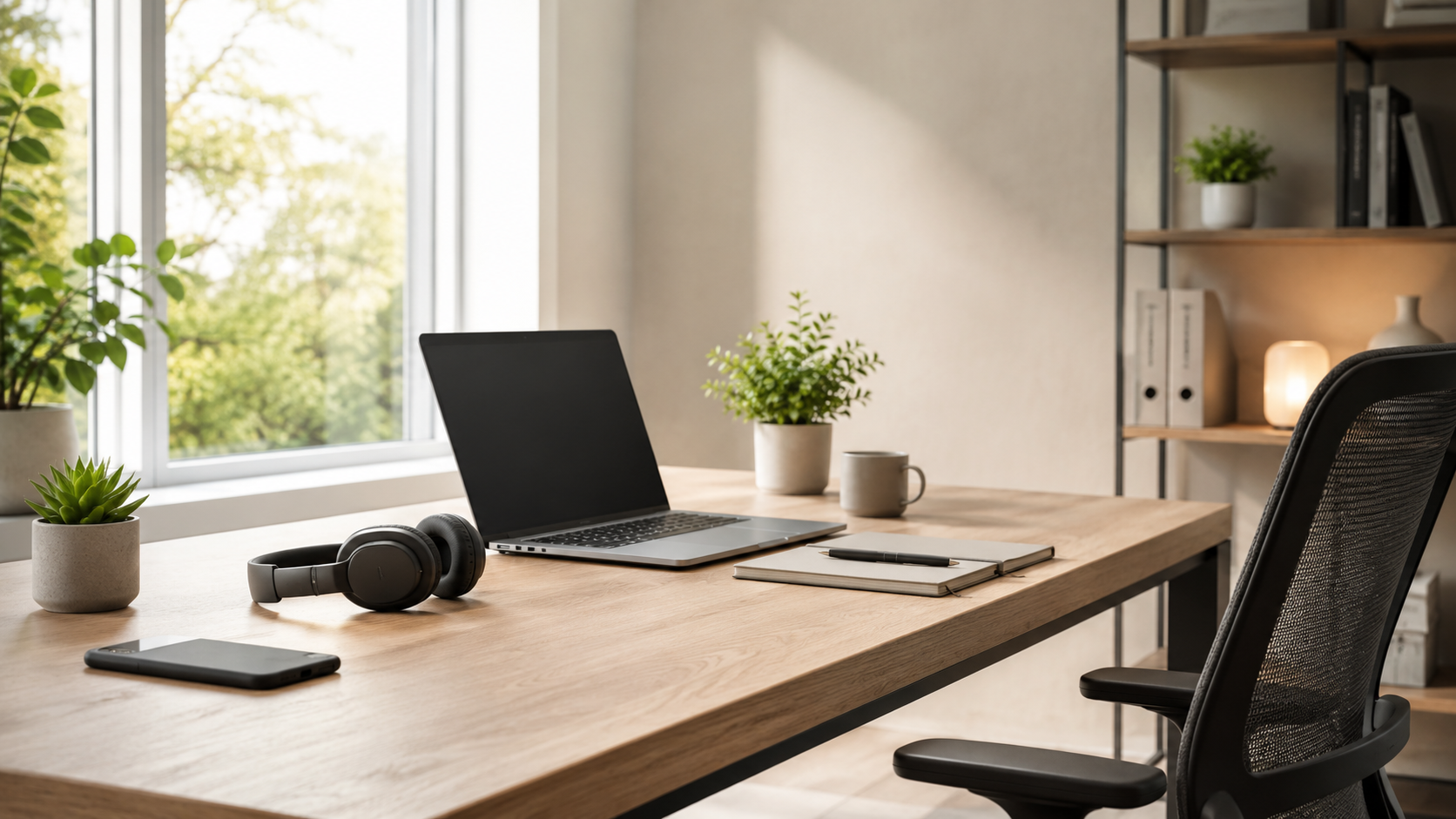
Designing a distraction-free workspace can make it easier to focus, start tasks, and follow through. Your workspace does not have to be perfect or expensive. The goal is to create an area that supports attention, lowers friction, and helps you do the task in front of you with fewer interruptions.
What Makes a Workspace Distracting?
A distracting workspace is any space that keeps pulling your attention away from your main task. This can happen because of visual clutter, noise, phone alerts, uncomfortable seating, or too many unrelated items nearby.
For example, if your desk has bills, snacks, mail, hobby supplies, and work materials all mixed together, your brain has more to sort through. Even when you are trying to focus, those items can quietly remind you of other tasks.
A distraction-free workspace is not about having a spotless desk. It is about making the space match the job you are trying to do.
Start with One Clear Purpose
Before changing your space, ask: “What do I need this workspace to help me do?” Examples may include:
Writing or studying
Paying bills
Working from home
Planning the week
Reading or learning
Once you know the purpose, remove or relocate items that do not support it. If the desk is for work, keep work tools nearby and move unrelated items somewhere else. If you use the same space for many tasks, use a small bin, folder, or tray to switch materials in and out.
Reduce the Main Distractions
You do not need to fix everything at once. Start with the distractions that interrupt you most often. Try these simple changes:
Clear only the area directly in front of you.
Keep your phone out of reach during focus time.
Close tabs, apps, or programs you are not using.
Use headphones or quiet background sound if noise is a problem.
Keep water, a notebook, and needed supplies nearby.
Put distracting papers into one “later” folder instead of leaving them spread out.
Face away from high-traffic areas if movement pulls your attention.
Small setup choices can reduce the number of decisions your brain has to make.
Make Starting Easier
A good workspace should make the next step obvious. If you plan to write, have the document, notes, or notebook ready. If you plan to pay bills, keep the bills, calculator, and account information in one place.
At the end of each work session, reset the space for the next time. This could be as simple as clearing your mug, closing extra tabs, and leaving tomorrow’s top task visible.
Takeaway
Designing a distraction-free workspace is about creating a space that helps your attention land in the right place. You do not need a perfect office or a major makeover. Start by choosing the purpose of the space, removing one major distraction, and setting up the next task so it is easier to begin.
General information only. Not medical, mental health, or professional advice.