Creating a Simple Monthly Budget
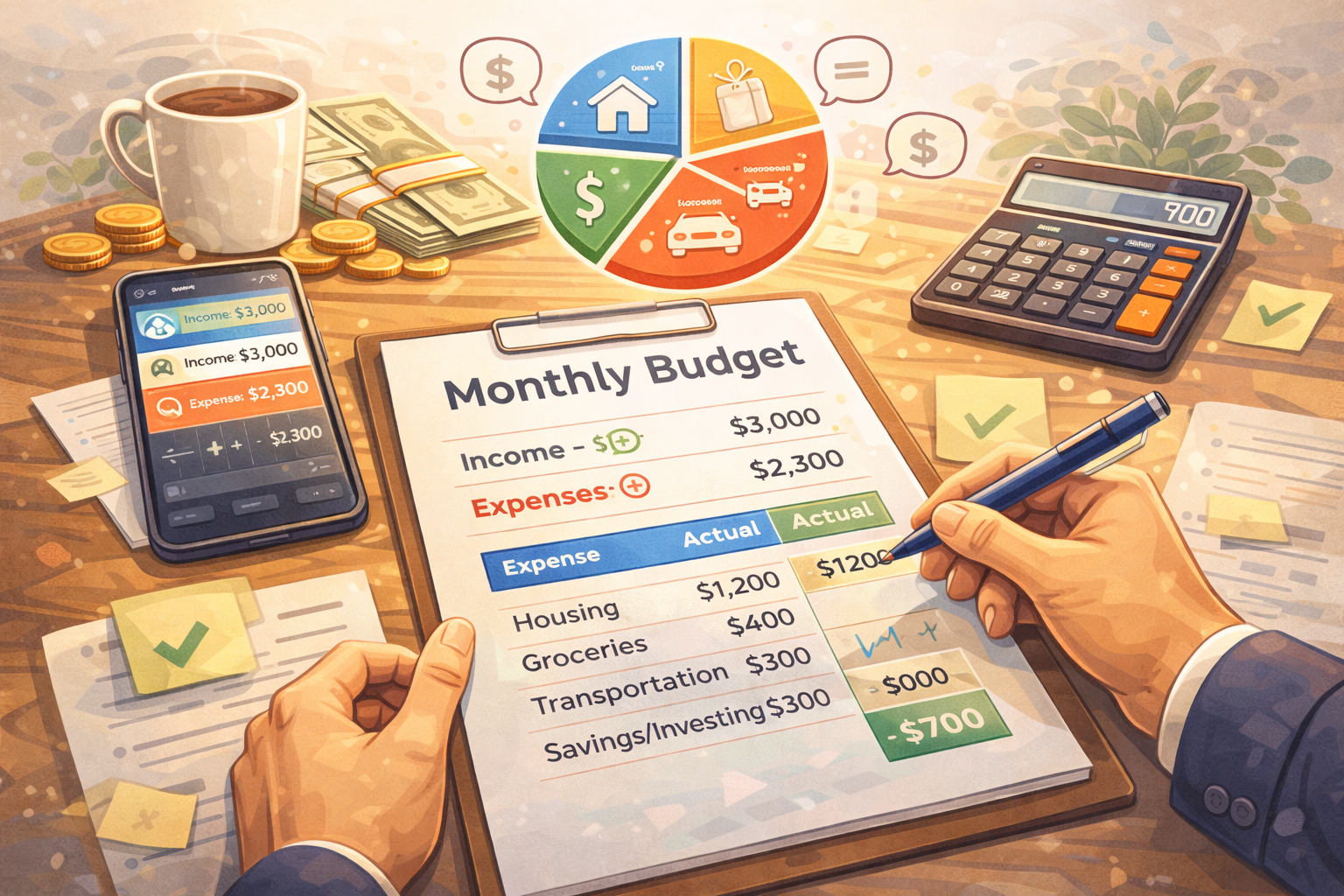
A simple monthly budget is just a plan for how you will use your money for one month. It shows what comes in, what goes out, and what is left. Creating a simple monthly budget can help you pay bills on time, avoid overdraft fees, and make steady progress on goals like debt payoff or savings.
Step 1: Know Your Monthly Income
Start with your “money in.” Monthly income means the money you actually take home after taxes. Include:
Paychecks (after tax)
Tips or side jobs
Benefits or regular payments
Add these together to get your total monthly income. This is the foundation of your simple monthly budget.
Step 2: List Your Monthly Expenses
Next, look at “money out.” Split your expenses into two groups:
Fixed expenses: Bills that stay about the same each month, like rent, car payment, phone, or subscriptions.
Variable expenses: Costs that change, like groceries, gas, eating out, or shopping.
Use recent bank and card statements to make your list. It does not have to be perfect; a good estimate is enough to start.
Step 3: Compare Money In vs Money Out
Now compare:
Add up all your monthly expenses.
Subtract: total income − total expenses.
Three common results:
Positive number: You have money left over. You can use this for savings, debt payoff, or a small buffer.
Roughly zero: You are spending almost all your income. Small changes can help you build some breathing room.
Negative number: You are spending more than you earn. This is a sign to cut costs or find ways to increase income.
Step 4: Give Every Dollar a Job
A simple monthly budget works best when you tell your money where to go on purpose. Examples:
Set a fixed amount for groceries and try to stay within it.
Decide ahead of time how much you will spend on eating out or fun.
Choose a monthly amount for savings or extra debt payments, even if it is small.
You can write this in a notebook, spreadsheet, or app.
Step 5: Review and Adjust Each Week
Budgets are living plans, not one-time events.
Check in once a week to see how you are doing.
Move a little money between categories if needed.
Notice patterns, like overspending in one area, and make small adjustments next month.
Takeaway
Creating a simple monthly budget is about awareness, not perfection. By listing your income, writing down your expenses, and checking in weekly, you can slowly move from reacting to money surprises to making deliberate choices with your cash.
Not financial advice. Educational purposes only.