Minimum Payments: Why They Keep You in Debt Longer
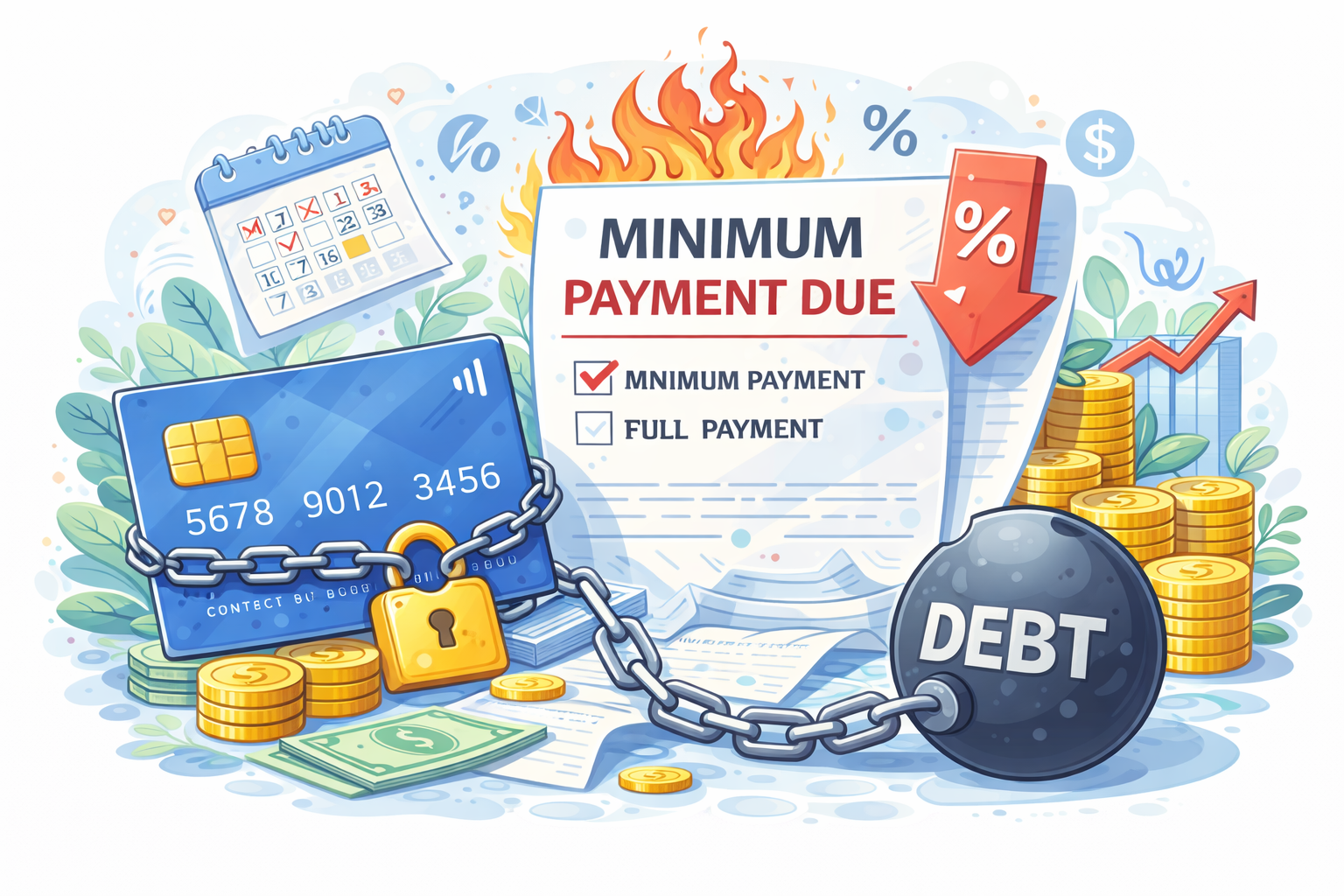
Minimum payments are the smallest amount your credit card company asks you to pay each month. They seem helpful when money is tight, but relying on minimum payments can keep you in debt much longer and cost you more in interest. Understanding how minimum payments work can help you make clearer choices about your credit card debt.
What Is a Minimum Payment?
A minimum payment is the lowest amount you must pay on your credit card bill to stay current. It is usually:
A small percentage of your total balance (for example, 1–3%), plus
Any interest and fees you owe for that month.
Paying at least the minimum keeps your account in good standing and avoids late fees. The tradeoff is that it often barely reduces the amount you actually owe.
Where Your Minimum Payment Really Goes
When you pay only the minimum:
A big part of your payment goes toward interest (the cost of borrowing).
A smaller part goes toward principal (the original amount you borrowed).
Example in simple terms:
Balance: $1,000
Minimum payment: $30
Interest for the month: $20
In this case, only $10 reduces your balance. The next month, the credit card calculates new interest on the remaining balance, and the cycle repeats.
How Minimum Payments Stretch Out Your Debt
Because so much of each minimum payment goes to interest, your balance falls slowly. That means:
You stay in debt for many years if you only pay the minimum.
You may pay several times the original amount in interest over time.
Credit cards often use compound interest, which means you pay interest on your balance plus any past unpaid interest. This can make long-term debt even more expensive.
Why Minimum Payments Can Still Be Useful
There are some benefits:
They protect you from late fees if you cannot pay more this month.
They give you short-term breathing room during emergencies.
The limit is that they are a short-term tool, not a long-term plan for paying off debt.
Practical Ideas to Reduce the Impact
Aim to pay a little more than the minimum whenever you can.
Round up your payment to the next $10 or $25.
Focus extra payments on one card at a time to see faster progress.
Check your statement for how long payoff takes with minimums vs higher payments.
Takeaway
Minimum payments keep your account in good standing, but they are designed to stretch your debt over a long time. Even small extra amounts above the minimum can shorten how long you stay in debt and reduce how much interest you pay overall.
Not financial advice. Educational purposes only.