Overdrafts and How to Avoid Them
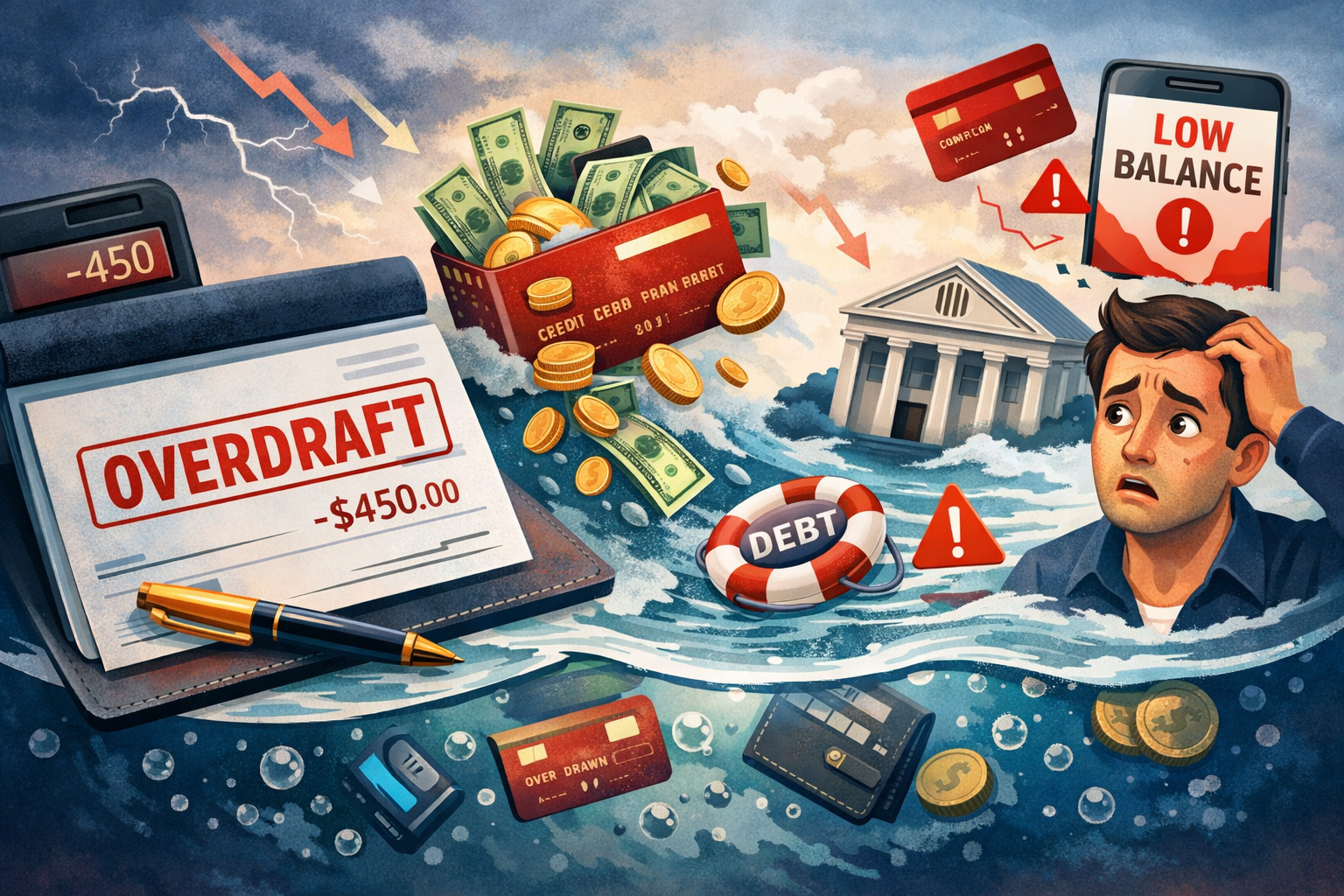
An overdraft happens when you spend more money than you have in your checking account. The bank covers the extra amount for you, but often charges a fee. Understanding overdrafts explained and how to avoid them can save you from surprise charges and reduce stress around your day-to-day spending.
What Is an Overdraft?
An overdraft is when your account balance goes below zero.
Simple example:
You have $40 in your account.
You use your debit card to buy $50 of groceries.
Your account is now at –$10 (overdrawn), and the bank may charge an overdraft fee.
Some banks let the transaction go through and charge a fee. Others may decline the transaction and possibly charge a different type of fee.
Common Overdraft Fees and Terms
Banks may charge:
Overdraft fee: A charge when the bank lets a transaction go through even though you do not have enough money.
NSF (non-sufficient funds) fee: A fee charged when the bank rejects a payment due to not enough money.
Overdraft protection: A service that uses another account or credit line to cover the shortfall, sometimes with its own fees or interest.
Fee rules vary, so it is important to read your bank’s policy or ask questions.
Why Overdrafts Happen
Overdrafts often occur when:
You forget about a bill or subscription that hits your account.
You rely only on your mental balance instead of checking your account.
A check you deposited has not cleared yet, but you spend as if it has.
Multiple small purchases add up faster than you realize.
Overdrafts are usually a timing problem: money going out before enough money comes in.
How to Reduce or Avoid Overdrafts
Practical ideas:
Check your balance regularly. Look at your account before large or unusual purchases.
Keep a small buffer. Aim to leave a bit of money (even $25–$50) in checking instead of going down to zero.
Track automatic payments. List all subscriptions and bill due dates so they do not surprise you.
Use low-balance alerts. Many banks let you set alerts when your balance drops below a certain amount.
Consider turning off overdraft coverage for debit card purchases. This can mean the transaction is declined instead of approved with a fee, depending on your bank’s options.
These steps do not have to be perfect. Even one or two changes can lower your risk.
Questions to Ask Your Bank
What are your overdraft and NSF fees?
Do you offer alerts for low balances or upcoming bills?
What overdraft protection options do you have, and what do they cost?
Knowing the rules helps you plan and avoid surprises.
Takeaway
Overdrafts happen when more money leaves your account than is in it, often leading to extra fees. By checking your balance, using alerts, keeping a small buffer, and understanding your bank’s policies, you can lower your chances of overdrafts and keep more of your money for your actual goals.
Not financial advice. Educational purposes only.