Dividends in Plain English
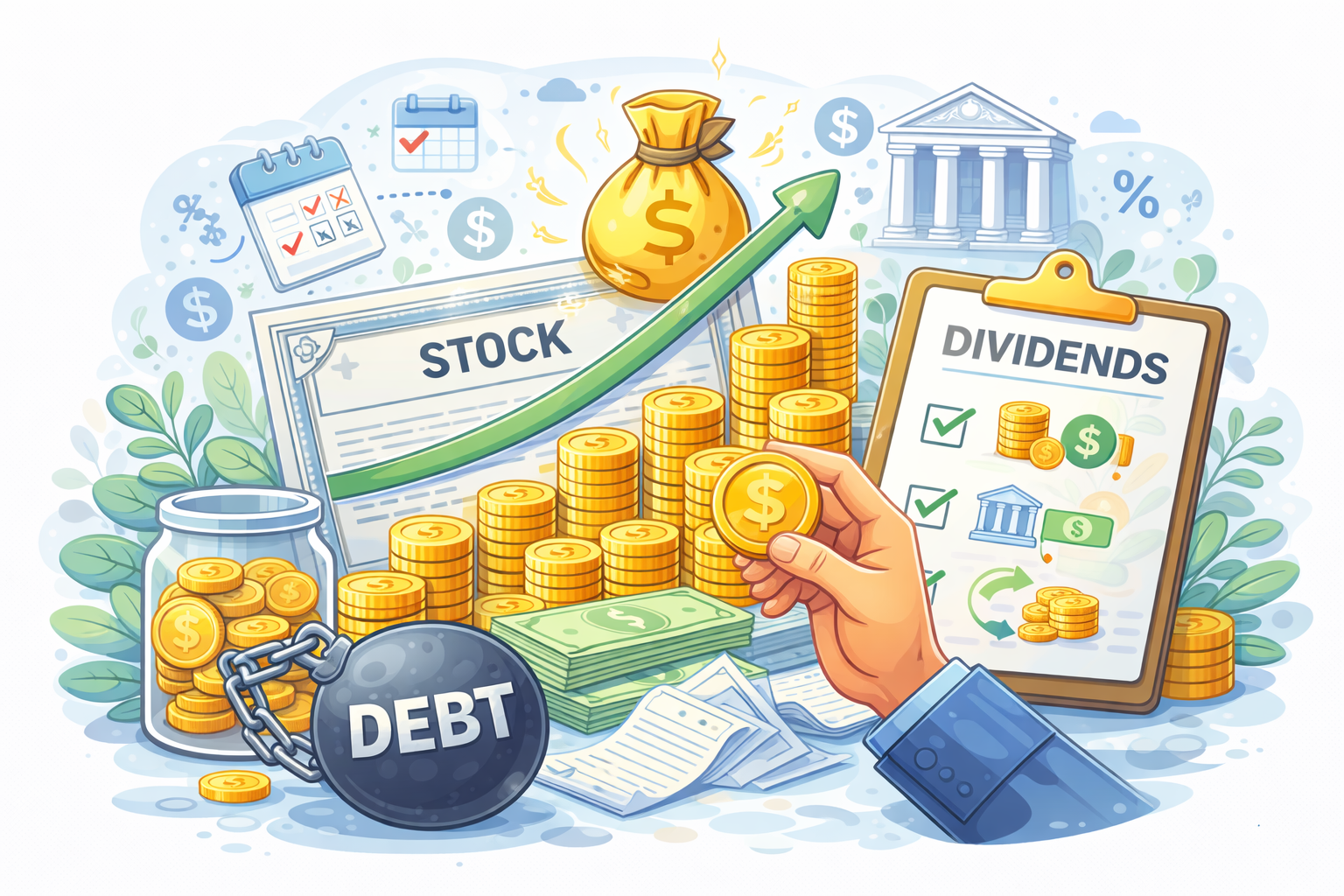
Dividends show up a lot when people talk about “income from stocks.” They are one way companies share profits with their shareholders. Understanding dividends in plain English helps beginners see that some stocks can pay you cash while you hold them, not just when you sell.
What Is a Dividend?
A dividend is a payment some companies make to their shareholders, usually in cash.
If you own shares in a company that pays dividends, you may receive a small amount of money per share, such as $0.50 per share every quarter (every three months). Not all companies pay dividends. Many fast-growing companies keep all their profits to reinvest in the business instead.
How Do Dividends Work?
Most common dividends are cash dividends, paid directly into your brokerage account.
Basic idea:
The company announces a dividend amount, such as $1.00 per share for the quarter.
If you own 20 shares, you would receive $20 before any taxes or fees.
Payments are usually monthly, quarterly, or yearly, depending on the company.
Some companies also issue stock dividends, which pay you in extra shares instead of cash, but cash dividends are more common for beginners to see.
What Is Dividend Yield?
Dividend yield is a simple way to compare dividend payments to the stock price.
A basic formula is: Dividend yield = Yearly dividend per share ÷ Share price
If a stock trades at $50 and pays $2 in dividends per year, the yield is 4 percent. Yield can move up or down as the share price changes, even if the dividend stays the same.
Why Dividends Matter for Beginners
Dividends can:
Provide regular income, which some investors like for retirement or cash flow.
Encourage a long-term mindset, since you are paid while you hold, not just when you sell.
Signal that a company is profitable enough to return cash to shareholders.
However:
Dividends are not guaranteed. Companies can cut or stop them.
Very high dividend yields can be a warning sign if the underlying business is struggling.
Dividends are usually taxable, depending on your local rules.
Beginners should see dividends as one part of a stock’s total return, along with price changes, not as “free money.”
Takeaway
Dividends are cash payments some companies make to shareholders from their profits. They can add income on top of any price gains, but they can also be reduced or stopped, and high yields can carry extra risk. For beginners, the key is to understand what a dividend is, how it fits into total return, and that all investments can still go up or down in value.