How Bond Yields and Prices Move
What Is a Bond Yield?
A bond yield is the return an investor earns from a bond, usually shown as a percentage.
At a basic level, yield is tied to:
The interest payment the bond makes
The price someone pays for the bond
The time left until maturity
The maturity date is when the borrower is supposed to repay the original amount of the bond.
If you buy a bond at its original price and hold it to maturity, the math may feel simple. But once bonds trade in the market, their prices can move up or down. That changes the yield for new buyers.
The Basic Relationship
The key idea is:
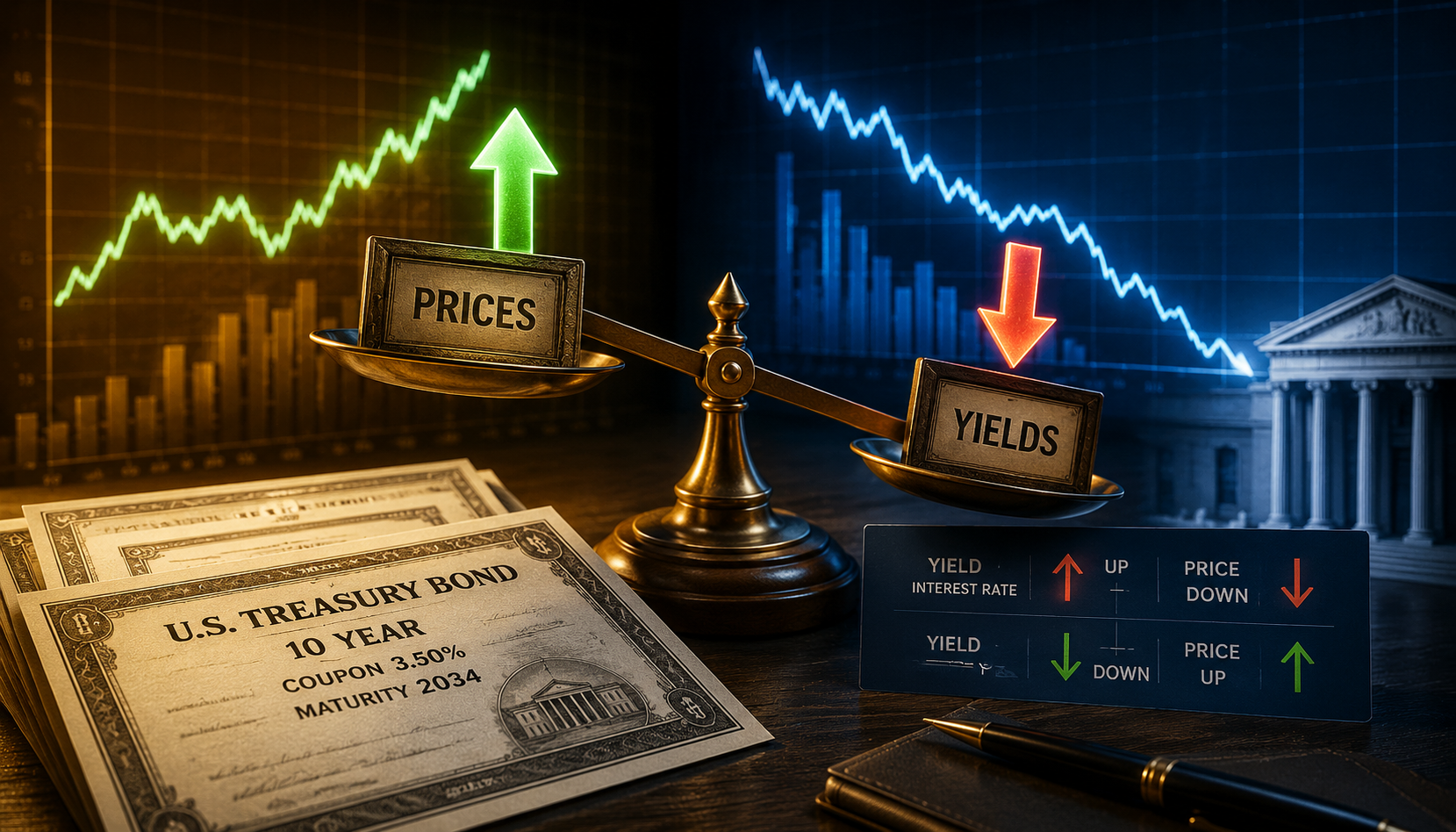
When bond prices go up, yields go down
When bond prices go down, yields go up
This happens because the bond’s interest payment is usually fixed.
For example, imagine a bond pays $50 per year in interest. If the bond costs $1,000, that $50 payment equals a 5% yield. But if the bond price rises to $1,100, the same $50 payment is a smaller return compared to the higher price. The yield falls.
If the bond price drops to $900, that same $50 payment becomes a higher return compared to the lower price. The yield rises.
Why Bond Prices Change
Bond prices often move because of changes in interest rates.
If new bonds are paying higher rates, older bonds with lower interest payments become less attractive. Their prices may fall so their yields become more competitive.
If new bonds are paying lower rates, older bonds with higher interest payments become more attractive. Their prices may rise because investors may be willing to pay more for that higher income.
This is why interest rates and bond prices are closely connected.
Why This Matters for Beginners
Bonds are often used for income and stability, but they are not risk-free. If you sell a bond before maturity, you may receive more or less than you paid.
Bond funds can also move in price because they hold many bonds that are constantly affected by interest rates, credit risk, and market demand.
What to Watch
Beginners can pay attention to:
Interest rates: Rising rates often pressure bond prices
Maturity length: Longer-term bonds usually react more to rate changes
Credit quality: Riskier borrowers may need to offer higher yields
Inflation: Higher inflation can make fixed payments less valuable
Takeaway
Bond yields and prices usually move in opposite directions. When prices rise, yields fall, and when prices fall, yields rise. For beginners, this relationship is important because bonds can still lose value before maturity, especially when interest rates change.
Not financial advice. Educational purposes only.