Index Funds Explained
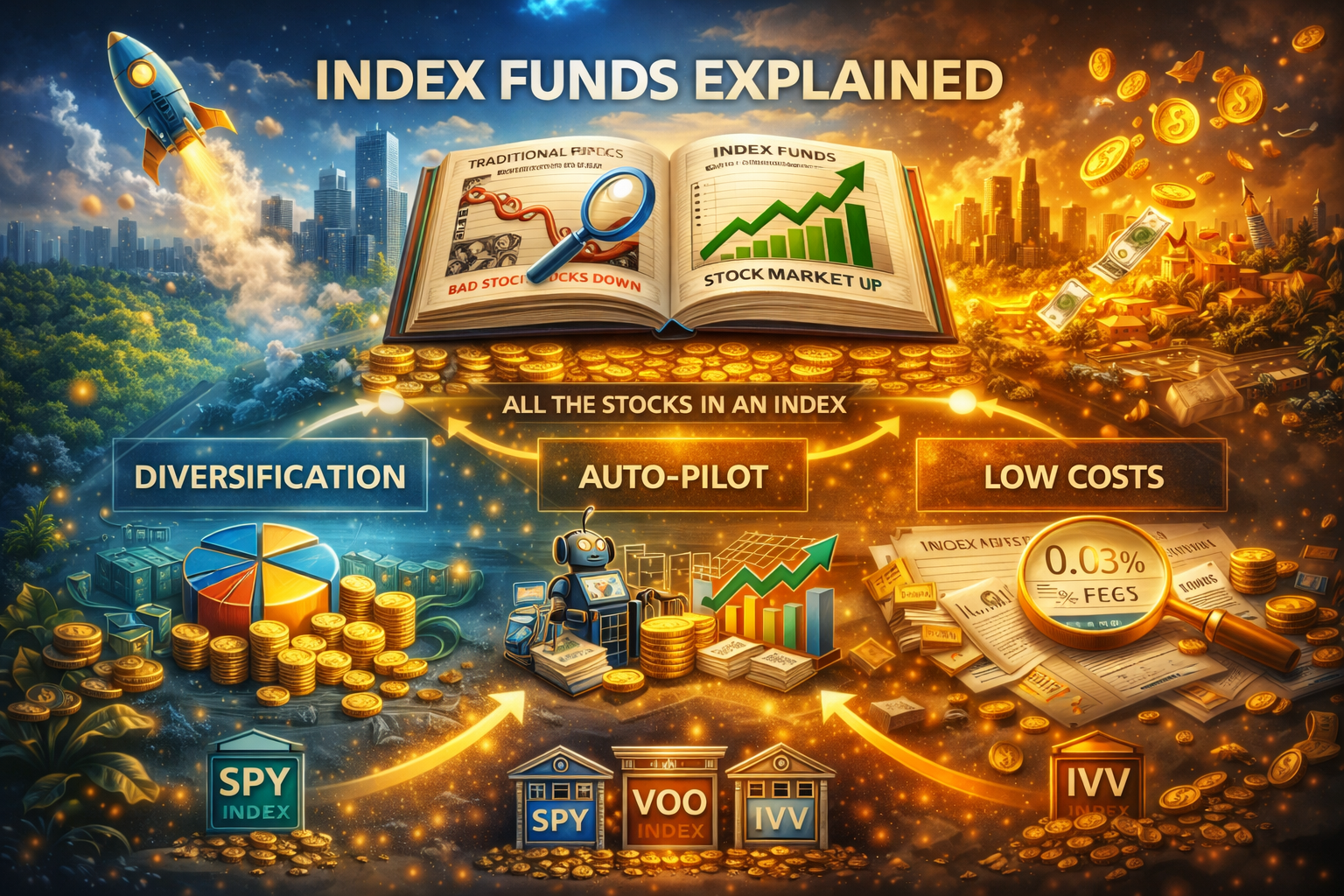
An index fund is a fund designed to copy the performance of a market index.
A market index is a group of investments used to represent part of the market. For example:
The S&P 500 tracks 500 large U.S. companies
A total stock market index tracks a broader slice of the U.S. stock market
Some indexes track bonds, international stocks, or specific sectors
When you buy an index fund, you are buying a fund that aims to follow one of those indexes rather than trying to beat it.
How Index Funds Work
An index fund holds many of the same investments that are in the index it tracks.
For example, if an index includes hundreds of companies, the fund may hold all of them, or a close sample of them, in similar proportions. This helps the fund move in a way that is close to the index.
Index funds can come in different forms, including:
Mutual funds
ETFs (exchange-traded funds)
The main idea stays the same: the goal is to match the market or a part of it, not outguess it.
Why Beginners Hear About Index Funds So Often
Index funds are popular because they are often seen as a simple, low-maintenance way to invest.
Potential benefits:
Diversification: One fund can hold many companies or bonds at once
Lower costs: Many index funds have lower fees than actively managed funds
Simplicity: Easier than choosing many individual stocks
Consistency: The strategy is rules-based instead of depending on a manager’s predictions
For beginners, this can reduce complexity and make it easier to understand what they own.
Risks and Limits
Index funds are simple, but they are not risk-free.
Potential risks and drawbacks:
Market risk: If the index falls, the fund usually falls too
No chance to outperform the index: The goal is to follow the market, not beat it
Index concentration: Some indexes become heavily weighted toward certain sectors or large companies
Tracking differences: A fund may not match its index perfectly because of fees and other factors
So while index funds can lower some risks through diversification, they still rise and fall with the market they follow.
Takeaway
An index fund is a fund that tries to track a market index instead of beat it. It can give beginners broad exposure, diversification, and lower costs in a simple format. The key is to understand what index the fund follows, what it costs, and that it can still go up or down in value along with the market.
Not financial advice. Educational purposes only.