Simple Definitions: Assets, Liabilities, Equity, and Debt
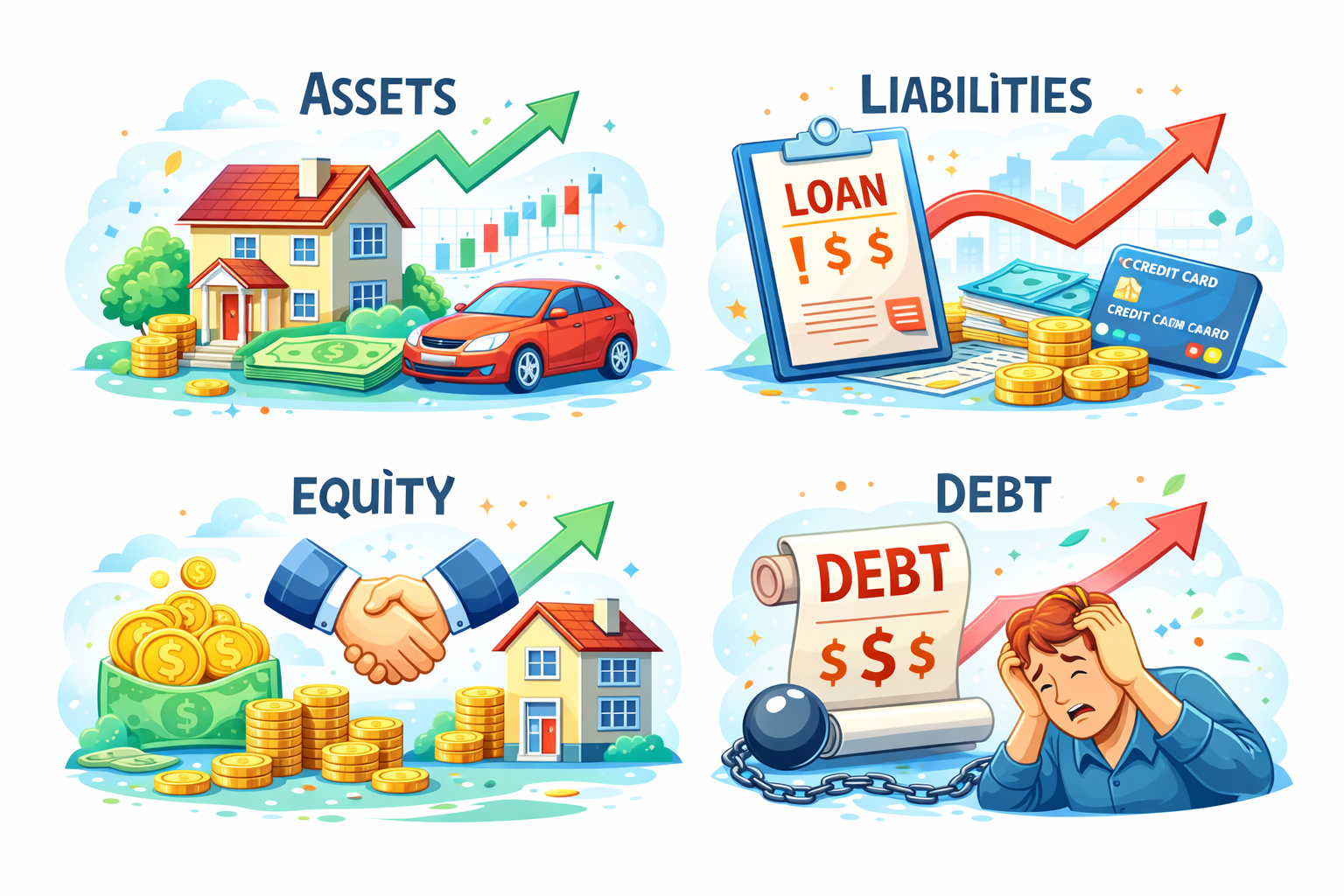
Understanding assets, liabilities, equity, and debt helps you read basic financial information. These ideas show what someone or a company owns, owes, and is really “worth” on paper. Learning how assets, liabilities, equity, and debt work is a key step for beginners who want these terms explained in simple language.
Assets: What You Own
An asset is anything you own that has value.
For a person, assets can be cash, a car, or investments. For a company, assets include buildings, machines, inventory, and money in the bank. Assets matter because they are the resources that can be used to pay bills, grow a business, or support future goals.
Liabilities: What You Owe
A liability is a debt or obligation you must pay in the future.
For a person, liabilities include credit card balances, car loans, and mortgages. For a company, liabilities include bank loans, unpaid bills, and taxes owed. Liabilities matter because too much debt compared to assets can create financial stress and higher risk.
Equity: The “Leftover” Ownership
Equity is what is left over after subtracting liabilities from assets.
For a person, equity might be the value of a home minus the mortgage. For a company, equity is the owners’ claim on the business after paying all debts. The basic idea is:
Equity = Assets − Liabilities
If liabilities are larger than assets, equity can be very small or even negative. That can signal financial trouble.
Debt: A Specific Type of Liability
Debt is money that has been borrowed and must be paid back, usually with interest.
All debt is a liability, but not all liabilities are debt. For example, unpaid bills are liabilities but may not be formal loans. Debt can help someone or a company grow faster, but it also increases risk if income falls or interest rates rise.
Why These Terms Matter for Beginners
When you look at a company or your own finances, these four ideas fit together. Assets show what is owned. Liabilities and debt show what is owed. Equity shows the net position.
For beginners, understanding this helps you see that a big number (like total assets) is not enough. You also need to know how much debt and other liabilities exist, and how much true equity is left.
Takeaway
Assets, liabilities, equity, and debt are the basic building blocks of any financial picture. They help you see what is owned, what is owed, and what is really left over. Learning these terms makes it easier to understand companies, personal finances, and the risks involved.
Not financial advice. Educational purposes only.