How Blockchain Actually Stores Data
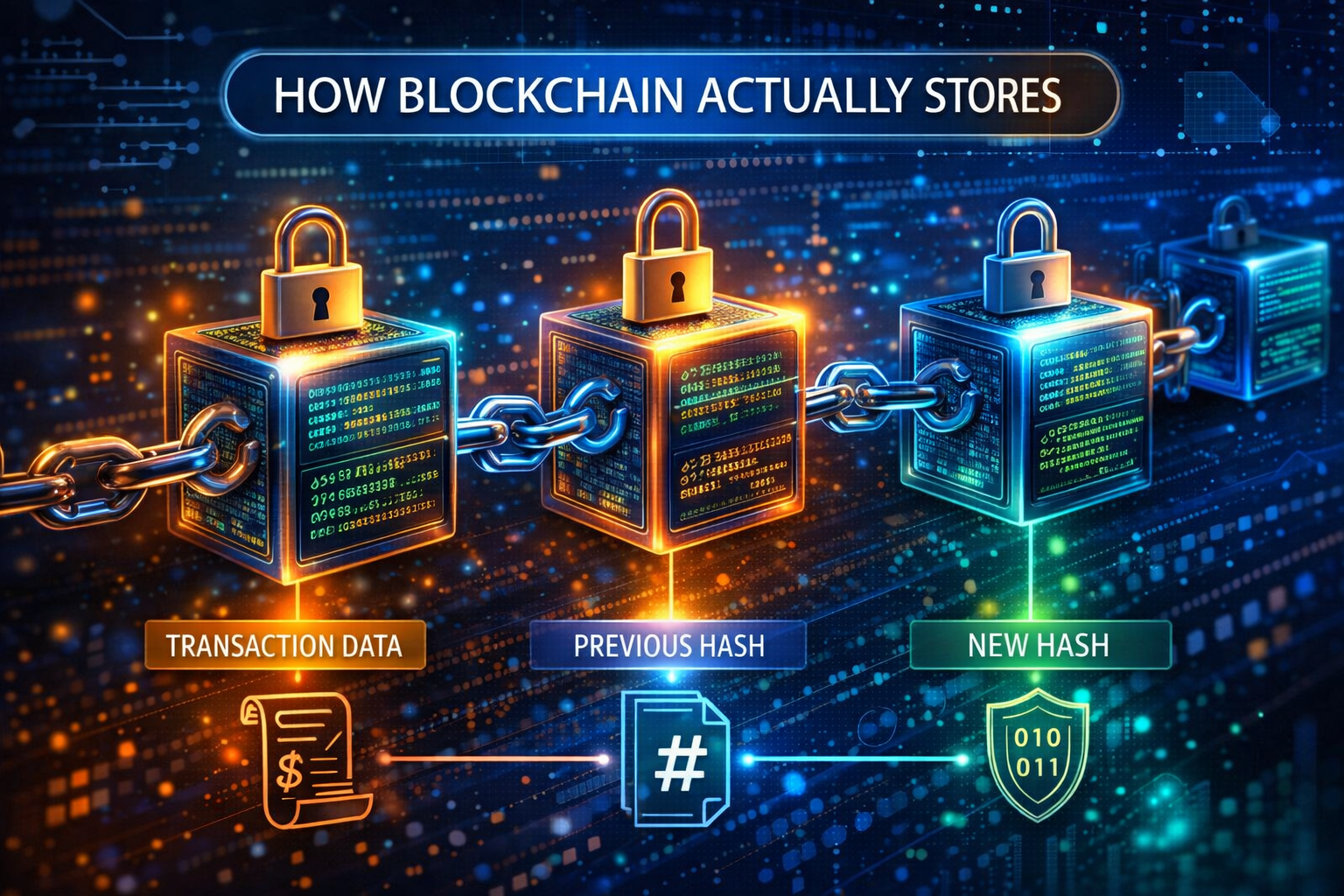
A blockchain may sound like a place where files, coins, and apps all “live.” That idea is partly true, but it can also be misleading. Understanding how blockchain actually stores data helps beginners see what is really recorded on-chain, what is stored elsewhere, and why blockchains are built the way they are.
What a Blockchain Really Is
A blockchain is a shared digital record book. It stores information in groups called blocks, and each new block is linked to the one before it.
That creates a chain of records that is hard to change after the fact. Instead of one company holding the only copy, many computers on the network keep copies and agree on the current version.
What Gets Stored in a Block
A block usually does not store huge files like videos or full websites. It mainly stores smaller pieces of structured data, such as:
Transaction details
Wallet addresses
Amounts sent or received
Time-related information
Smart contract activity
References to other data
Think of it more like a permanent log than a giant hard drive. For example, on a payment-focused blockchain, a block may store:
Wallet A sent 2 coins to Wallet B
The transaction happened at a certain time
The network confirmed it in a certain block
Why Data Is Stored in Blocks
Each block is like a page in a record book. Once the page is filled and confirmed, the network moves on to the next page.
Each block also includes a cryptographic link to the block before it. That link helps protect the history. If someone tries to change old data, the chain no longer matches, and the network can reject the altered version.
This is one reason blockchain records are considered tamper-resistant.
Does Blockchain Store Everything Directly?
Not always. In fact, often it does not. Because on-chain storage is expensive and limited, many projects store only the most important data directly on the blockchain. Larger or less critical data may be stored off-chain, which means outside the blockchain.
For example:
A blockchain may store proof that a file exists
But the full file itself may be stored elsewhere
This keeps the blockchain smaller and easier for the network to maintain.
On-Chain vs Off-Chain Data
This is an important beginner concept:
On-chain data is written directly to the blockchain and becomes part of the permanent record.
Off-chain data is stored somewhere else, such as a normal server or decentralized file system, while the blockchain may only store a pointer, link, or proof.
So when people say “it’s on the blockchain,” that may mean:
The full data is on-chain, or
Only a record, receipt, or reference is on-chain
That difference matters.
Why This Matters
Understanding how blockchain stores data helps you:
See why blockchains are slower and more expensive than normal databases
Understand why not every app puts everything fully on-chain
Ask better questions about permanence, trust, and transparency
A project that stores only a link on-chain is not the same as one that stores the full record on-chain.
Takeaway
Blockchain stores data as linked records in blocks, not as one giant file folder for everything. It is best at storing important, verifiable pieces of information like transactions, contract actions, and proofs. Because on-chain space is limited and costly, many projects mix on-chain records with off-chain storage. As a beginner, it helps to ask not just “Is it on the blockchain?” but “Which part is actually stored there?”
Not financial advice. Educational purposes only.