Liquidity vs Volatility in Crypto: How They Interact
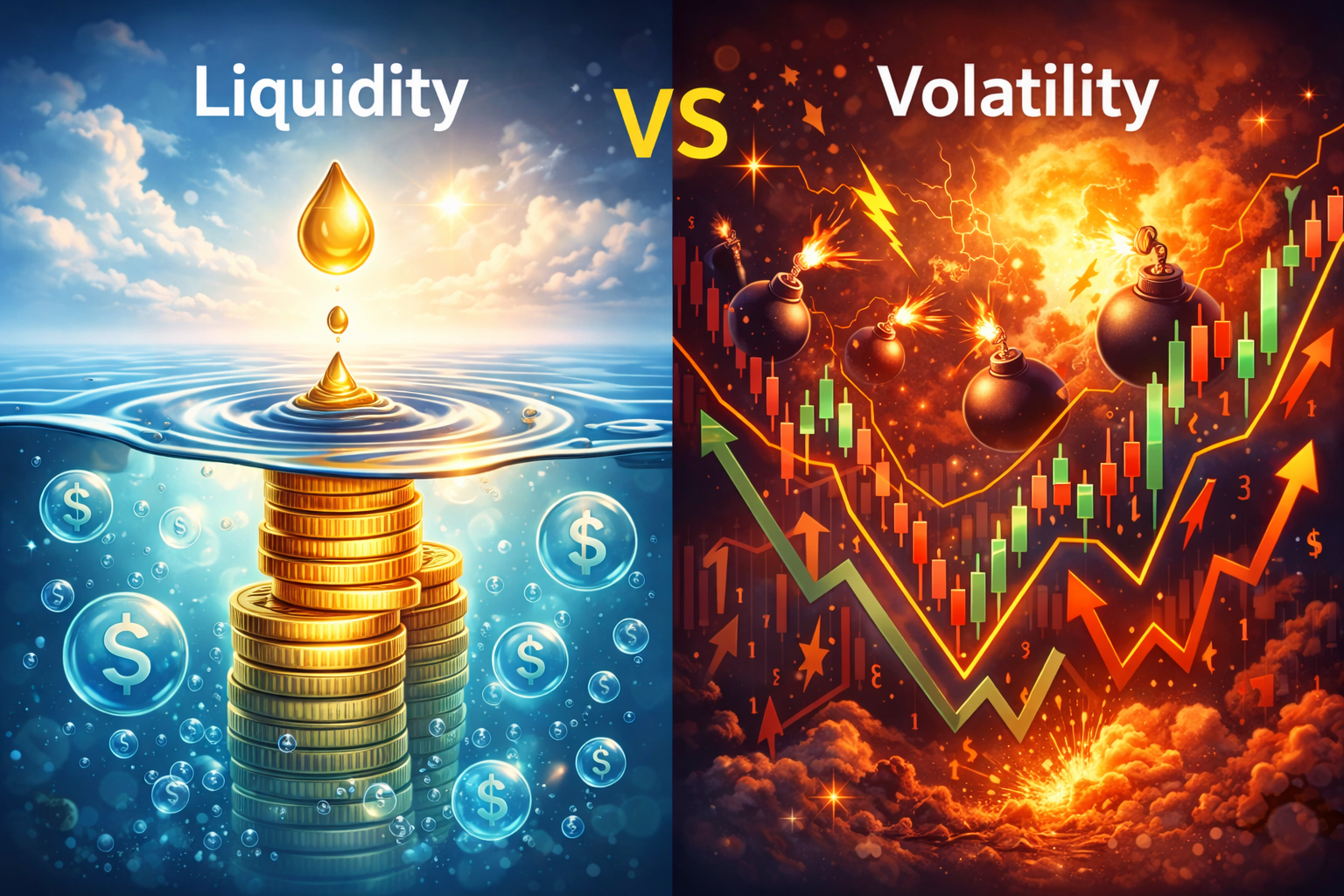
Two words you will hear a lot in crypto are “liquidity” and “volatility.” They sound technical, but they affect every trade you make. Understanding liquidity vs volatility and how they interact helps you see why some coins move smoothly and others feel like a wild ride.
Quick Definitions in Plain English
Liquidity is how easy it is to buy or sell a coin without moving the price a lot.
Volatility is how much and how quickly the price moves over time.
A coin can be:
Liquid and calm.
Liquid and volatile.
Illiquid and extremely volatile.
The mix matters for your real-world trading experience.
How Low Liquidity Increases Volatility
When liquidity is low:
There are fewer buy and sell orders on an exchange.
Or, on a DEX, the liquidity pool is small.
This means:
Even a medium-sized order can push the price up or down sharply.
A single whale (large trader) can cause big candles in either direction.
So low liquidity often leads to:
Bigger spreads (gap between best buy and sell price).
More slippage (you get a different price than expected).
Stronger, faster price moves.
In short: low liquidity makes volatility worse.
How Volatility Affects Liquidity
Volatility can also change liquidity.
When volatility is very high:
Some market makers and traders pull back to reduce risk.
They may widen spreads or provide less liquidity.
This can create a loop:
High volatility scares away liquidity providers.
Lower liquidity makes each trade move the price more.
That leads to even higher volatility.
In calmer markets:
Traders may be more willing to provide liquidity.
Tighter spreads and deeper books can make price moves smoother.
Why This Matters
Understanding the link between liquidity and volatility helps you:
See why small-cap or meme coins can swing harder than large, liquid coins.
Realize that “cheap” prices with tiny liquidity can be dangerous traps.
Understand why the same dollar trade feels calm in one coin and wild in another.
Before trading:
Check both daily volume and liquidity, not just the chart.
Be extra careful with large orders in thin markets.
Expect more slippage and risk when liquidity is low and volatility is high.
Takeaway
Liquidity is about how easily you can trade. Volatility is about how much the price moves. Low liquidity tends to increase volatility, and extreme volatility can scare away liquidity, making things even choppier. As a beginner, look at both together, start small in thin markets, and remember that wild price swings are often a sign of weak liquidity, not magic opportunity.
Not financial advice. Educational purposes only.