Phishing in Crypto: What Beginners Need to Know
What Is Phishing?
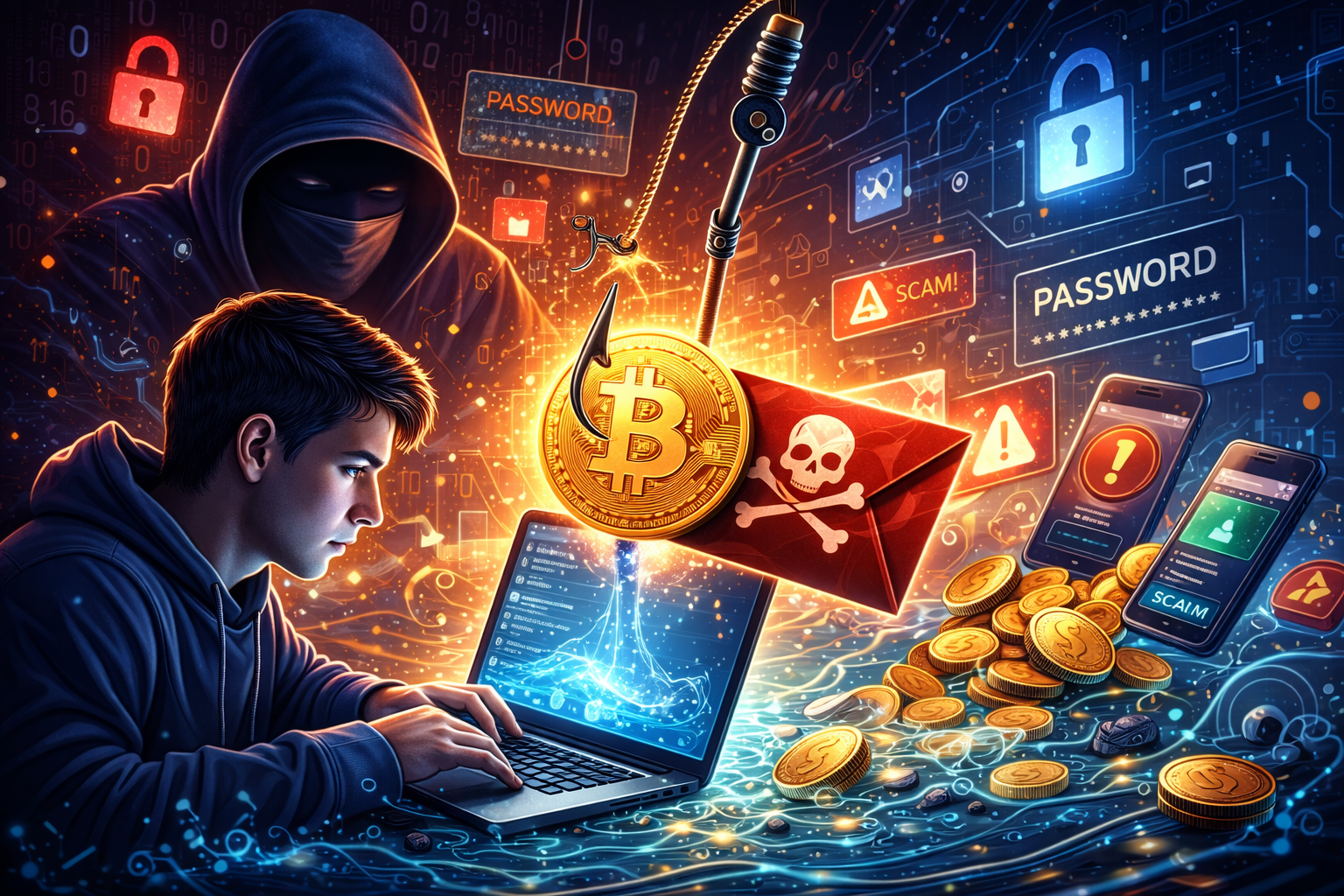
Phishing is when someone pretends to be a trusted person or company to steal your information or money. Phishing is one of the biggest risks in crypto. It is not a hack of the blockchain. It is a trick to make you hand over info. Understanding phishing in crypto helps you spot fake messages and protect your wallets.
In crypto, phishers try to get:
Your login details for exchanges.
Your wallet seed phrase or private key.
Your approval to move tokens from your wallet.
Once they have this, they can drain your accounts.
Common Types of Crypto Phishing
1. Fake websites (phishing sites)
Scammers copy real exchange or wallet sites.
The design looks almost identical.
The URL has small changes (extra letters, wrong domain, strange endings).
They ask you to log in or enter your seed phrase.
If you type your details, they send them to the real site and steal your account.
2. Fake support and “help”
Scammers pose as support staff in emails, DMs, or chat groups.
They offer to “fix” a problem or “unlock” funds.
They ask for remote access, seed phrase, or screenshots of your wallet.
Real support will never ask for your seed phrase or private key.
3. Fake airdrops, giveaways, and mints
You see posts like “Free airdrop, just connect your wallet and claim.”
The site then asks you to sign a transaction that gives them permission to spend your tokens.
Or it makes you pay a “small fee” first, then disappears.
If it sounds too good to be true, it usually is.
4. Email and message links
Phishing emails or DMs often say:
“Your account is locked, click here now.”
“Urgent security alert, verify your wallet.”
The links lead to fake sites that steal your details.
How To Protect Yourself From Phishing
Type website addresses yourself or use bookmarks you trust.
Check URLs carefully before connecting your wallet or logging in.
Never enter your seed phrase or private key into a website or form.
Treat DMs offering help, support, or “secret opportunities” as suspicious.
Be cautious with signature requests and token approvals. If you do not understand them, do not sign.
Use two-factor authentication (2FA) on exchanges and secure email accounts.
Takeaway
Phishing in crypto is about tricking you, not breaking the blockchain. Scammers use fake sites, fake support, and fake giveaways to get your keys, passwords, or approvals. Slow down, double-check links, and never share your seed phrase or private key with anyone, anywhere.
Not financial advice. Educational purposes only.