APR on Credit Cards: What It Means
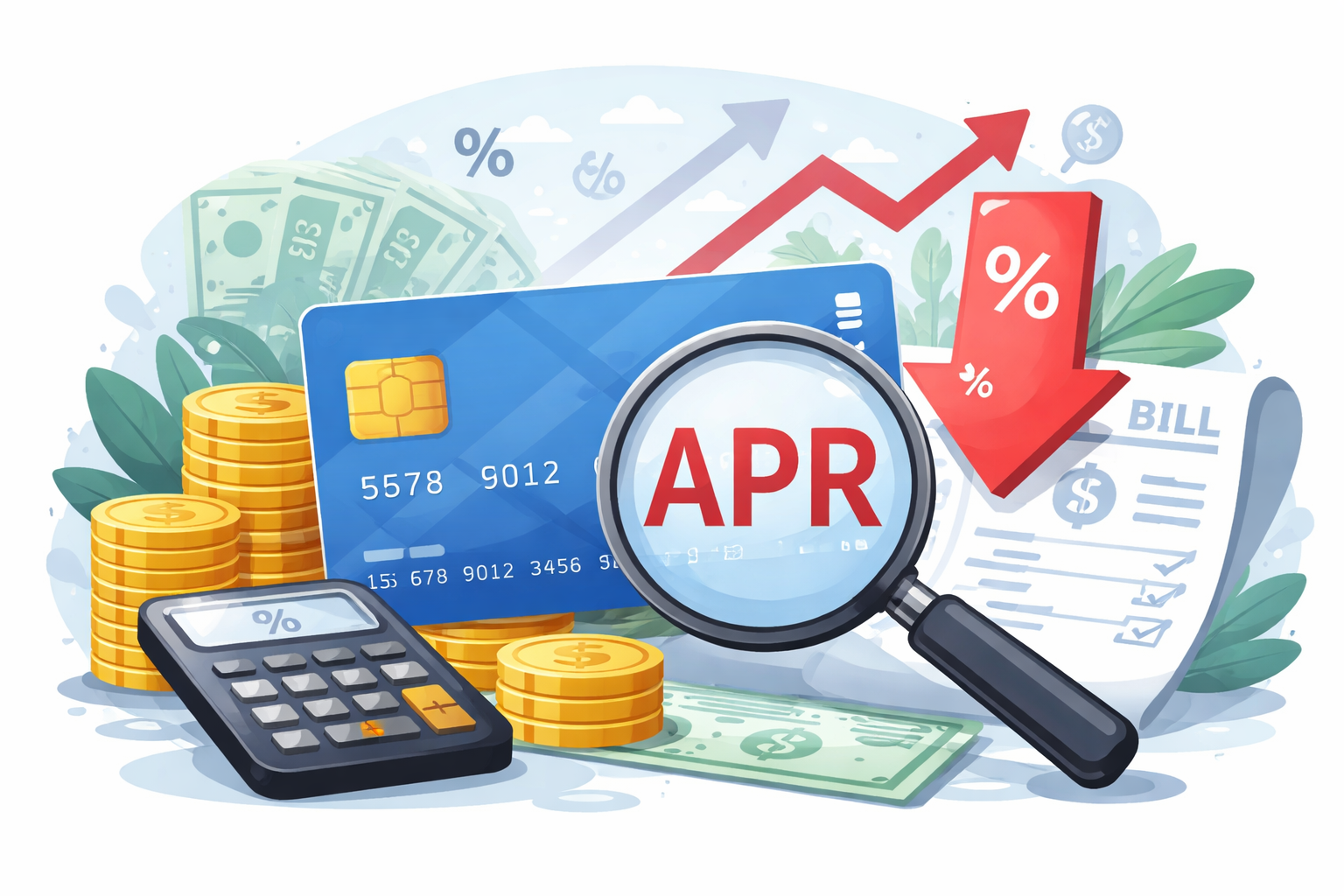
What Is APR on a Credit Card?
APR is the yearly interest rate you pay if you carry a balance on your credit card.
In simple terms, it is the price tag for borrowing:
If you pay your full statement balance by the due date, most cards charge no interest.
If you carry a balance, the APR tells you how quickly interest charges can build up.
Credit card issuers usually show your APR on your statement and in your card agreement.
How Credit Card APR Works Day to Day
Even though APR is a yearly number, credit cards often charge interest daily:
The card company takes your APR and turns it into a daily rate.
That daily rate is applied to your balance each day you owe money.
Interest is added to your balance, and future interest can be charged on that new, higher amount.
This is one reason credit card debt can grow faster than people expect.
Why Is Credit Card APR So High?
Credit card APR is often much higher than rates on mortgages, car loans, or some personal loans. Reasons include:
Unsecured debt: Credit cards are not backed by a house or car. If you do not pay, the lender has fewer ways to recover money.
Higher risk: Many people use cards during tight times, so default risk is higher. Lenders charge more to cover that risk.
Flexibility: You can borrow, pay back, and borrow again up to your limit. This open line of credit is more complex for lenders to manage.
Rewards and perks: Cash back, points, and travel rewards are paid for in part by interest and fees from cardholders who carry balances.
When interest rates in the wider economy rise, card APRs often rise too.
How High APR Affects You
High APR means:
Carrying a balance gets expensive, especially over many months.
Minimum payments may cover interest but do little to reduce the principal.
Large purchases can cost much more if not paid off quickly.
Practical Tips Around APR
Check your card’s APR on your statement or app.
Try to pay the full statement balance each month when you can.
If you cannot, aim to pay more than the minimum to reduce interest.
Be cautious about using high-APR cards for long-term debt.
Takeaway
APR on credit cards is the yearly cost of borrowing, and it is often high because credit card debt is unsecured and flexible. Knowing your APR and how it affects your balance can help you decide when to use a card, when to pay it off faster, and how to avoid costly long-term debt.
Not financial advice. Educational purposes only.