Short-Term vs Long-Term Stress
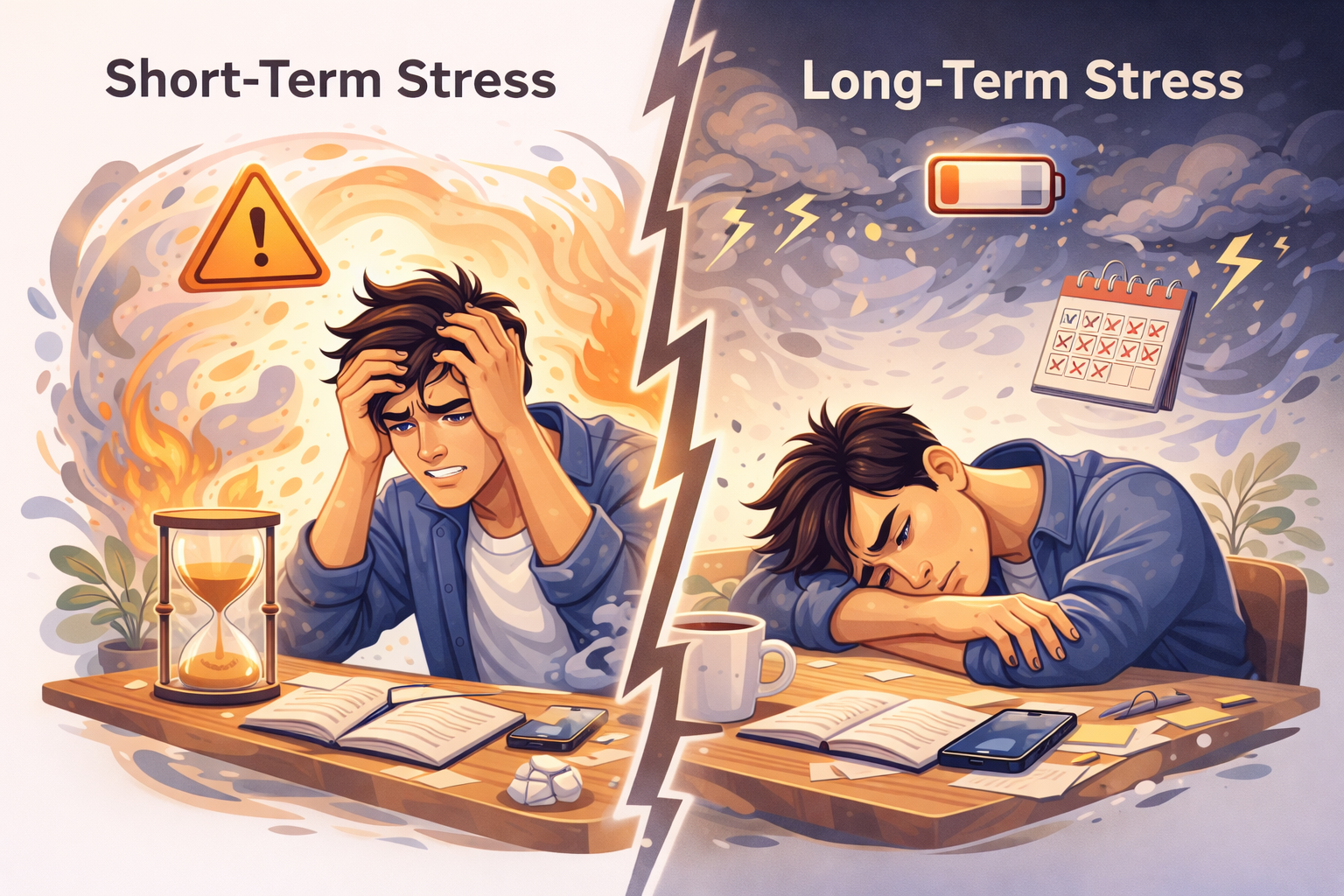
Short-term stress and long-term stress can feel similar in the moment, but they affect you in different ways. Understanding short-term vs long-term stress can help you decide what kind of support or changes you may need.
What Is Short-Term Stress?
Short-term stress (sometimes called acute stress) is a quick response to a situation that feels urgent or important. Examples include:
Rushing to make it to an appointment on time
Giving a presentation at work or school
Dealing with a sudden problem at home
Your body may react with a faster heartbeat, tense muscles, or sharper focus. Often, these reactions calm down after the situation passes. Short-term stress can sometimes help you act quickly or pay attention when you need to.
What Is Long-Term Stress?
Long-term stress (sometimes called chronic stress) happens when pressure or worry continues for weeks or months. There is no real “off switch,” so your system stays more activated than it should.
Examples include:
Ongoing money worries
A heavy workload that never really lets up
Long-lasting conflict at home or in relationships
Constant caregiving responsibilities without much rest
With long-term stress, you may feel tired, easily frustrated, or numb. You might notice changes in sleep, appetite, or motivation. It can be harder to recover your energy because your body and mind do not get many chances to fully relax.
Why the Difference Matters
Short-term vs long-term stress matters because they call for different responses.
For short-term stress, simple actions like slowing your breathing, breaking a task into smaller steps, or taking a short walk may help you reset.
For long-term stress, you may need bigger or more steady supports, such as:
Adjusting your schedule or workload where possible
Building regular rest and recovery into your week
Asking for help with responsibilities
Creating small daily habits that give you a sense of control, like planning your day or setting simple boundaries around your time
Not all stress can be removed, but even small changes can make ongoing stress feel less heavy.
Takeaway
Short-term stress is a brief response to a specific challenge. Long-term stress is pressure that keeps going and can slowly wear you down. Noticing which type you are dealing with can guide your next steps. Start by naming your main sources of stress, then look for one small, realistic change that can give you more space or support.
General information only. Not medical, mental health, or professional advice.