Automating Savings: Simple Systems That Reduce Decision Fatigue
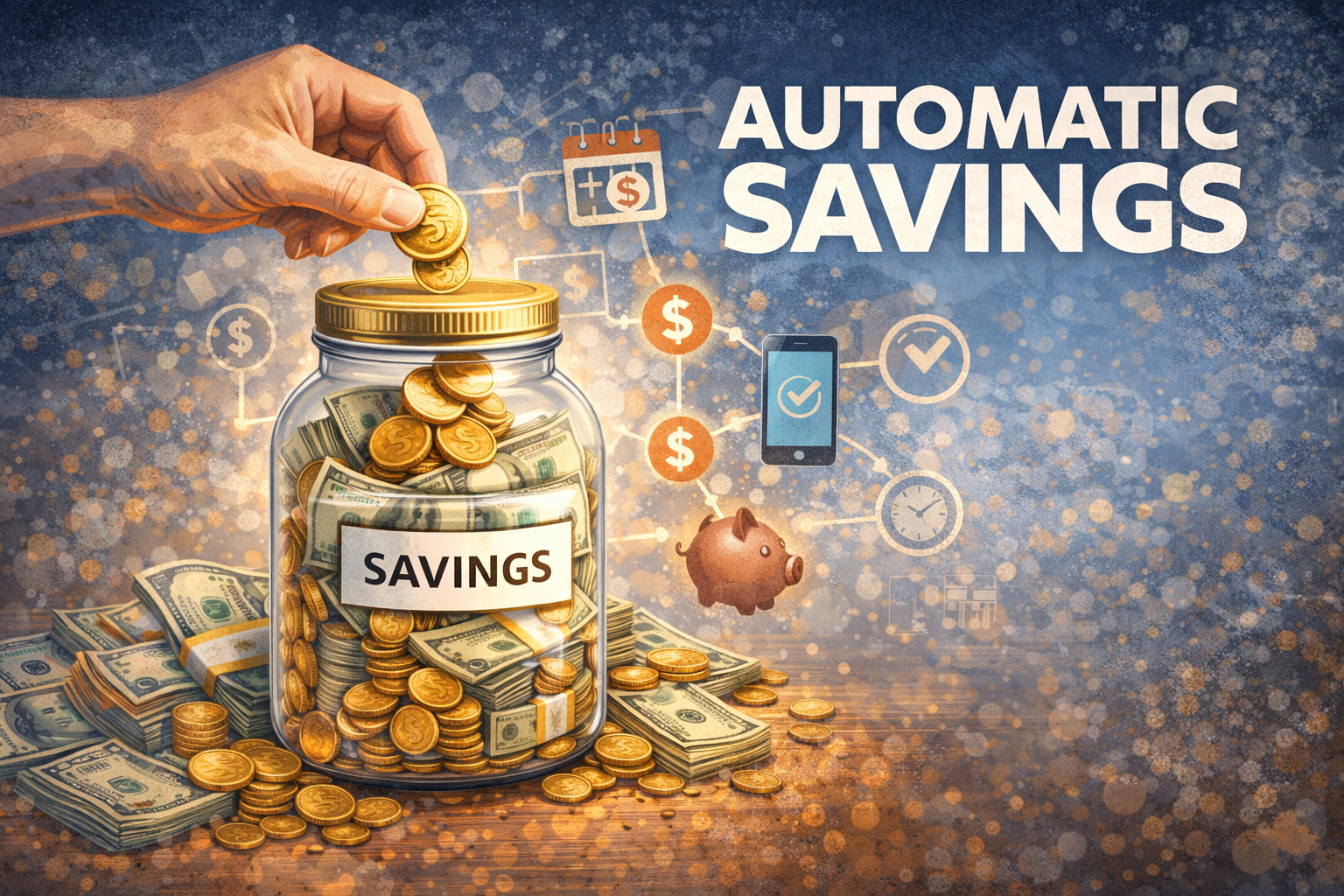
Automating savings means setting up systems that move money into savings without you having to decide every time. Instead of asking, “Can I afford to save this month?” the transfer happens automatically. Automating savings can reduce decision fatigue, which is the mental tiredness that comes from making too many choices, and make it easier to build money habits that stick.
What Is Decision Fatigue?
Decision fatigue is the feeling of being worn out from making many choices all day. By the time you think about saving, you may feel too tired to decide or may choose the easy option: not saving. Automation removes some of those decisions. You set it up once, and it repeats until you change it.
Method 1: Automatic Transfers on Payday
One of the simplest automation tools is an automatic transfer. How it works:
Choose a small amount to save from each paycheck, like $20, $50, or another realistic number.
Set up your bank to automatically move that amount from checking to savings on payday.
Let it run in the background.
This is a “pay yourself first” system. You treat savings like a regular bill, not something you do only if there is money left.
Method 2: Split Direct Deposit
If your employer allows it, you can split your paycheck.
Ask if part of your paycheck can go straight into savings and the rest into checking.
For example, $100 to savings, the rest to checking each pay period.
Because you never see that savings money in checking, you are less tempted to spend it. This reduces the need to decide every month to move money yourself.
Method 3: Automatic Round-Ups
Some banks and apps offer “round-up” features.
When you make a purchase, the amount is rounded up to the next dollar.
The extra cents go into savings.
Example: If you spend $7.50, the transaction rounds to $8, and $0.50 goes to savings. Over time, small amounts can slowly add up with almost no effort.
Why Automation Helps Beginners
Automating savings:
Reduces daily decisions about “save or spend.”
Helps you stay consistent, even on busy or stressful days.
Makes progress feel more steady and less dependent on willpower.
The tradeoff is that you must check in sometimes. Automation does not replace paying attention. You still need to be sure you are not overdrawing your account.
Takeaway
Automating savings is about building simple systems that work in the background so you do not have to rely on willpower every month. By using automatic transfers, split direct deposit, or round-up tools, you can save small amounts consistently and reduce the stress of deciding over and over again.
Not financial advice. Educational purposes only.