Creating a Simple Bill Paying System
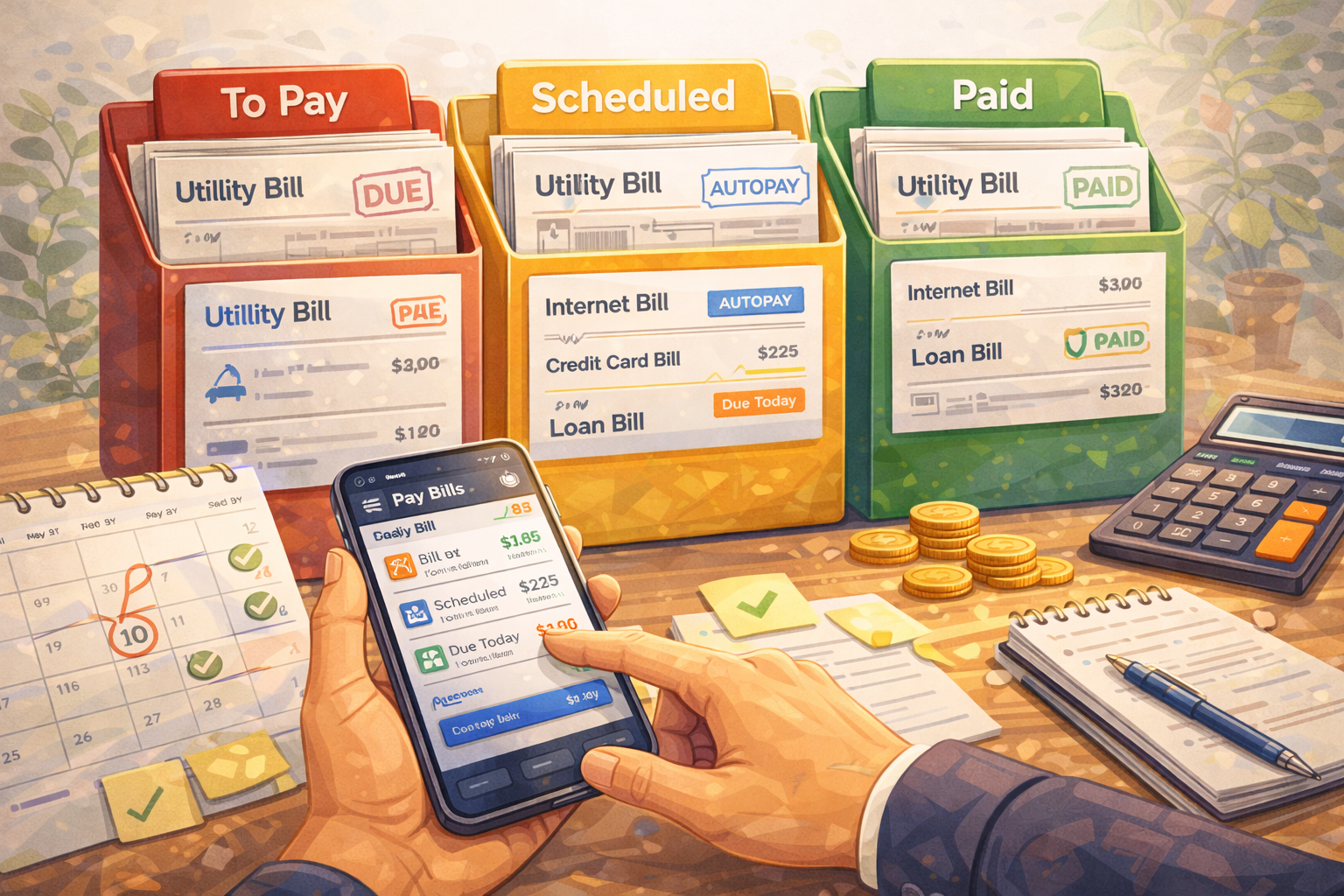
A simple bill-paying system helps you pay bills on time without feeling overwhelmed. It is just a basic routine for when and how you pay your regular expenses. Creating a simple bill-paying system can lower late fees, reduce stress, and help you know what is coming each month.
Step 1: List All Your Bills in One Place
Start by gathering information about every regular bill:
Rent or mortgage
Utilities (electric, water, gas)
Phone and internet
Streaming or subscriptions
Debt payments (credit cards, loans)
Insurance
For each bill, write down:
The name of the bill
The typical amount (or range)
The due date
How you pay it (online, mail, app, in person)
This list is the foundation of your bill-paying system.
Step 2: Match Bills to Your Paydays
Next, line up your bills with when you get paid.
If you are paid twice a month, decide which bills you will pay with each paycheck.
If many bills are due at the same time, see if any companies will let you change the due date.
The goal is to avoid a big pile of bills all hitting before you have money.
Step 3: Choose Your Main Payment Method
Pick one main way you will pay most bills, such as:
Online through your bank’s bill-pay feature
Directly on each company’s website or app
Mailing checks (less common now, but some people prefer it)
Try to keep it simple. Fewer methods usually mean less confusion.
Step 4: Use Autopay Carefully
Autopay means the company automatically takes money from your account on the due date.
It can help you:
Avoid late payments
Save time on paying the same bill every month
Tradeoffs:
You must be sure the money will be in your account.
You still need to check statements for mistakes or changes.
Many people set autopay for fixed bills (like a set phone bill) and pay variable bills (like credit cards) manually.
Step 5: Create a Bill Calendar and Reminder System
Use a simple calendar (paper, phone, or app):
Write each bill on its due date.
Add a reminder a few days before to review and pay.
You can also set phone alarms or text/email alerts so you do not rely on memory alone.
Takeaway
Creating a simple bill-paying system is about making bills predictable instead of surprising. By listing your bills, matching them to paydays, choosing a clear payment method, and using reminders, you can reduce late fees and worry, one month at a time.
Not financial advice. Educational purposes only.