Perfectionism and Procrastination
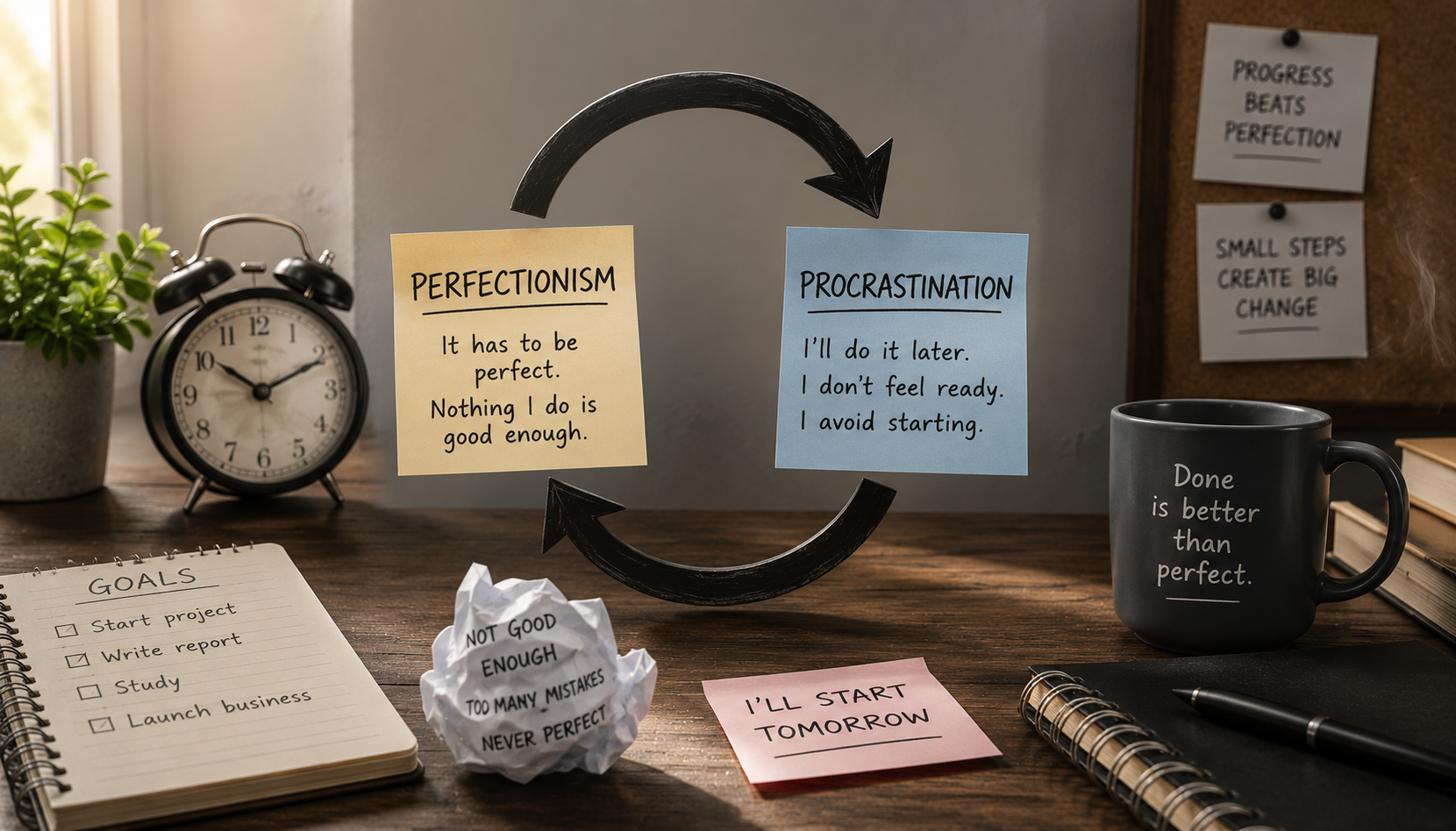
Perfectionism and procrastination often work together. Perfectionism is the pressure to do something perfectly or not do it at all. Procrastination is delaying a task, even when you know the delay may cause stress later. When these two patterns feed each other, even simple tasks can start to feel heavy.
Why Perfectionism Leads to Delay
Perfectionism can make a task feel bigger than it really is. Instead of thinking, “I need to write a rough draft,” you may think, “This has to be excellent right away.”
That pressure can make starting feel risky. If the first attempt is not good enough, it may feel like failure. So your brain looks for relief by delaying the task.
This can show up in everyday ways:
Rewriting the first sentence over and over.
Avoiding a project because you are not sure how to do it perfectly.
Waiting for the “right mood” or the “perfect time.”
Spending too long planning instead of starting.
Choosing easier tasks so you can feel productive without facing the harder one.
The delay may feel helpful in the moment, but it usually increases stress later.
How Procrastination Makes Perfectionism Worse
Procrastination can also strengthen perfectionism. When you wait until the last minute, you have less time to work carefully. Then the task feels rushed, tense, and harder to do well.
After that, you may think, “I always mess this up,” or “I need to do better next time.” That can create even more pressure the next time a similar task appears.
This creates a cycle:
Perfectionism makes starting feel uncomfortable.
Procrastination gives short-term relief.
The delay creates more pressure.
More pressure makes the next task feel even harder to start.
How to Break the Cycle
You do not have to stop caring about quality. The goal is to lower the pressure enough to begin.
Try these small steps:
Aim for a rough first version. Remind yourself that a first draft is allowed to be messy.
Set a time limit. Work for 10–20 minutes instead of waiting for a long open block.
Define “good enough.” Decide what the task truly needs, not what perfection would require.
Shrink the task. Change “finish the whole project” to “open the document and write three bullet points.”
Separate starting from improving. First create something. Later, revise it.
Notice perfectionist language. Watch for words like “always,” “never,” “must,” and “should.”
Reward starting. Give yourself credit for beginning, not only for finishing.
Small starts help reduce fear. Once a task exists in a rough form, it is usually easier to improve.
Takeaway
Perfectionism and procrastination feed each other by making tasks feel too risky to start, then more stressful after delay. Breaking the cycle begins with lowering the pressure and choosing one small action. You do not need a perfect start. You need a starting point you can build from.