Basic Strategies for Paying Down Debt
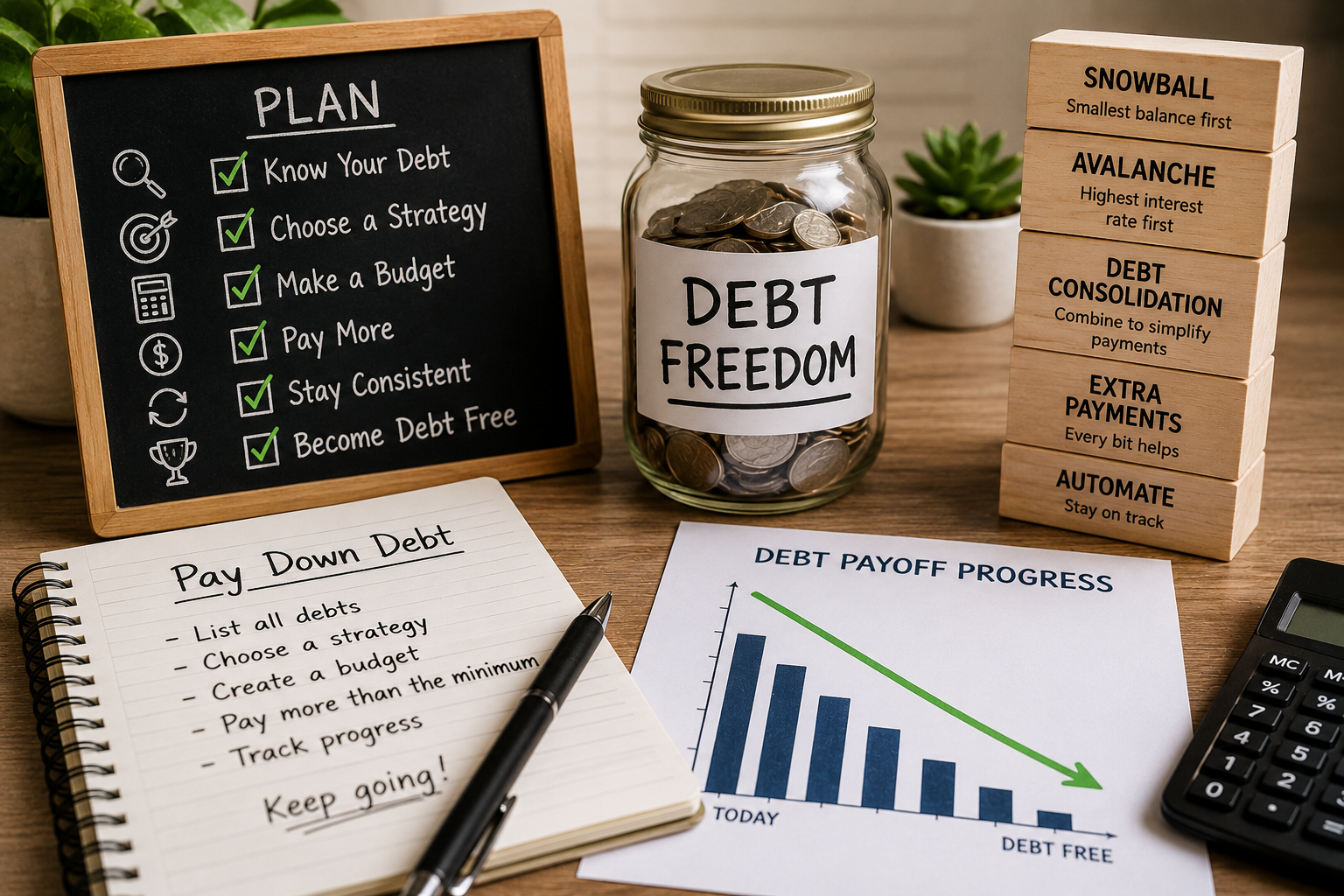
Paying down debt means making a plan to reduce the money you owe over time. Debt can include credit cards, personal loans, medical bills, car loans, or student loans. Learning basic strategies for paying down debt can help you lower interest costs, reduce stress, and feel more in control of your money.
Start With a Clear Debt List
Before choosing a strategy, write down what you owe.
Include:
Name of the debt
Total balance
Minimum payment
Interest rate
Due date
This list helps you see the full picture. It may feel uncomfortable at first, but it gives you the information you need to make a plan.
Strategy 1: Debt Snowball
The debt snowball method focuses on paying off the smallest balance first.
How it works:
Pay the minimum on every debt.
Put any extra money toward the smallest balance.
Once that debt is paid off, move that payment to the next smallest debt.
The benefit is motivation. Paying off a small debt can give you a quick win and help you keep going.
The tradeoff is that the smallest debt may not have the highest interest rate, so this method may cost more in interest over time.
Strategy 2: Debt Avalanche
The debt avalanche method focuses on the highest interest rate first.
How it works:
Pay the minimum on every debt.
Put extra money toward the debt with the highest interest rate.
Once that debt is paid off, move to the next highest interest rate.
The benefit is math. This method can reduce the total interest you pay.
The tradeoff is that progress may feel slower if the highest-interest debt has a large balance.
Strategy 3: Pay More Than the Minimum
Minimum payments keep your account current, but they often do not reduce the balance quickly. A large part of the payment may go toward interest.
Even small extra payments can help:
Add $10 or $25 to the minimum payment.
Round payments up to the nearest $50.
Use small windfalls, like a bonus or refund, toward one debt.
The goal is to reduce the principal, which is the original amount you borrowed.
Practical Tips for Staying on Track
Stop adding new debt while paying old debt, if possible.
Set payment reminders to avoid late fees.
Review your progress once a month.
Keep a small emergency fund so surprise expenses do not always go back on credit cards.
Ask lenders about hardship options if payments become unmanageable.
Takeaway
Basic strategies for paying down debt are about choosing a clear plan and sticking with it. The debt snowball can help with motivation, while the debt avalanche can help reduce interest. The best starting point is to know what you owe, pay on time, and put extra money toward one debt at a time when you can.
Not financial advice. Educational purposes only.