How Compound Interest Works
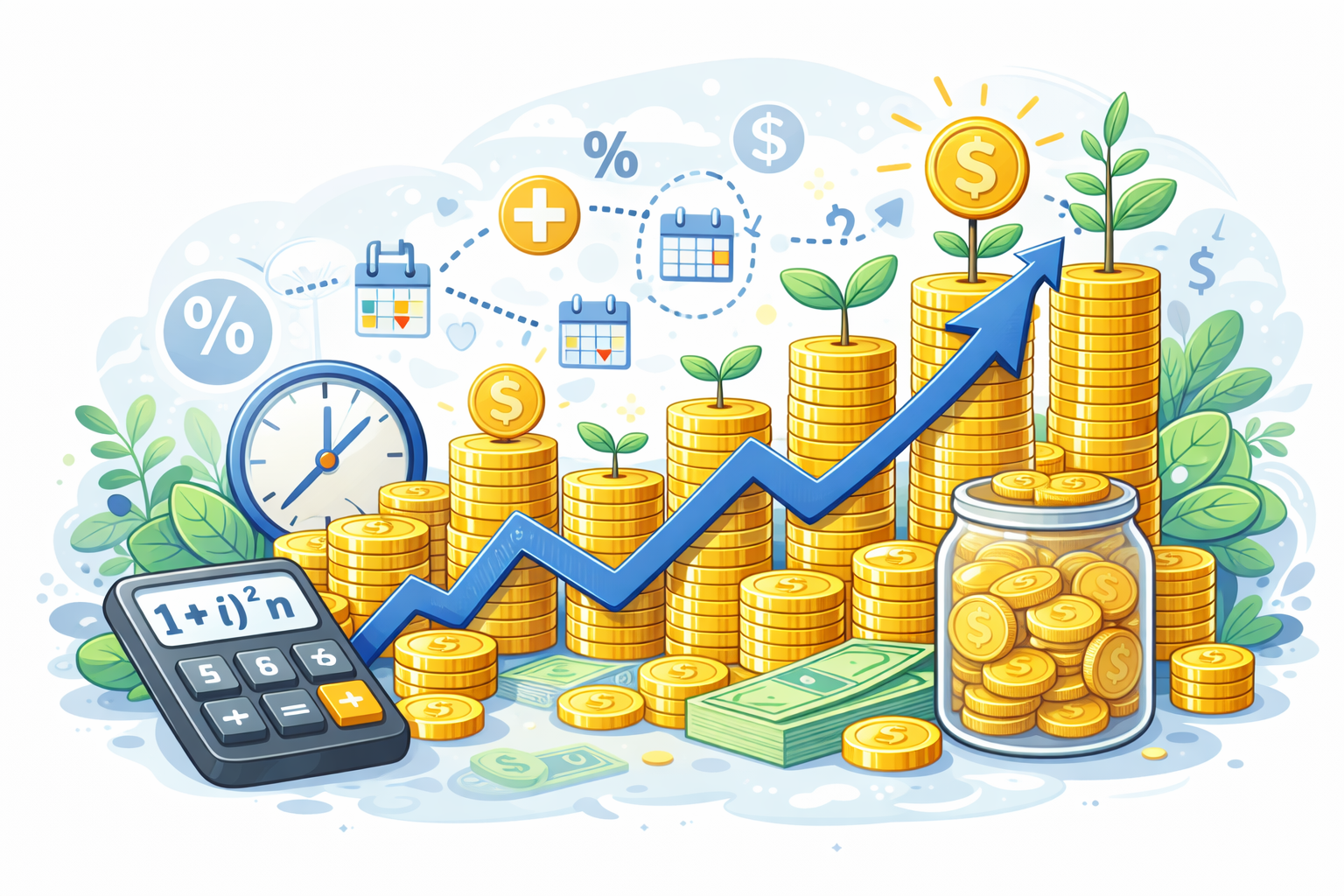
Compound interest is interest you earn on both the money you put in and the interest that money has already earned. Over time, this “interest on interest” can help your savings grow faster. Understanding how compound interest works can also help you see how debt can grow if you only make small payments.
Simple Interest vs Compound Interest
Simple interest is interest calculated only on the original amount (the principal). Compound interest is calculated on the principal plus any interest that has already been added.
Example in plain terms:
Simple interest: You earn interest on $1,000 only.
Compound interest: You earn interest on $1,000 today, then next period you earn interest on $1,000 plus the interest you earned before.
This repeated process is what makes balances grow faster over time.
How Compound Interest Works in Practice
There are three key pieces:
Principal: The starting amount of money.
Interest rate: The percentage you earn or pay each period.
Compounding frequency: How often interest is added (yearly, monthly, daily).
Example:
You save $1,000 at 5% interest per year, compounded yearly.
End of year 1: $1,050 (you earned $50).
End of year 2: You now earn 5% on $1,050, not just $1,000.
That means you earn a bit more than $50 in year 2.
Over many years, this snowball effect gets stronger.
Why Compound Interest Matters for Savings
For savings and investing, compound interest can:
Reward you for starting early, even with small amounts.
Help long-term goals, like retirement or big purchases.
Make regular contributions more powerful the longer you leave them alone.
The main tradeoff: You usually need time and patience. The biggest growth often happens later, after years of consistent saving.
Why Compound Interest Matters for Debt
Compound interest can also work against you:
Credit cards often compound interest daily or monthly.
If you only make minimum payments, your balance may shrink slowly.
Interest can build on top of interest, making debt more expensive over time.
Paying more than the minimum, or paying off balances quickly, can reduce the impact of compounding on debt.
Practical Tips
When saving, look at the interest rate and how often it compounds.
When borrowing, check how often interest is added and if there are fees.
Ask: “What happens if I leave this for 5 or 10 years?”
Use simple online calculators to see how balances might grow or shrink.
Takeaway
Compound interest is a powerful force that can grow savings or grow debt, depending on how you use it. Starting early, paying attention to interest rates, and understanding how often interest is added can help you make wiser money choices over time.
Not financial advice. Educational purposes only.