Simple Budget Methods for Beginners
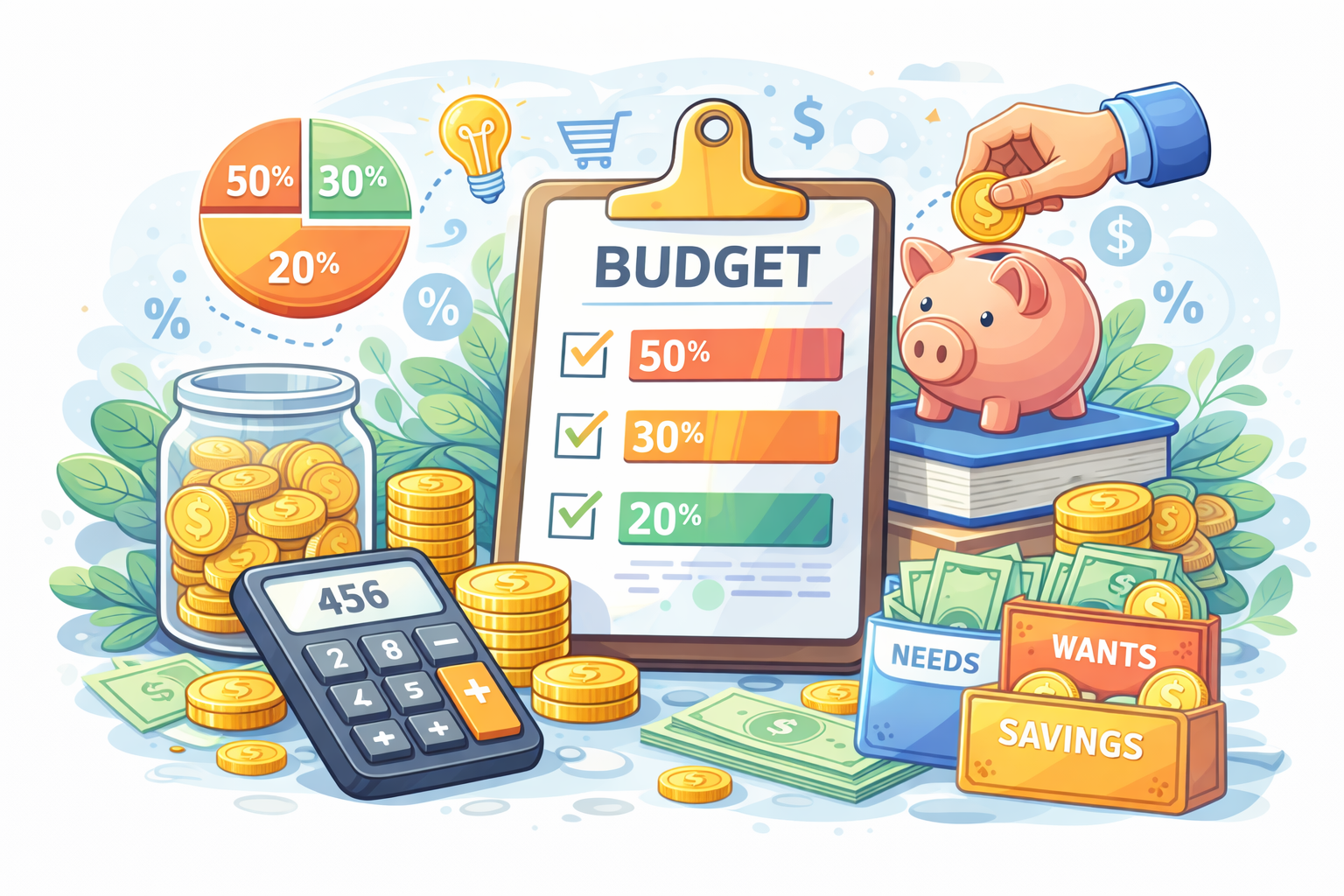
A budget is a simple plan for how you will use your money each month. It shows what comes in, what goes out, and what is left. Learning simple budget methods for beginners can help you pay bills on time, avoid overdraft fees, and find money for goals like debt payoff or savings.
Start With Your Money Picture
Begin with two basic questions:
How much money comes in each month (after taxes)?
Where is that money going right now?
Look at paychecks, benefits, and any side income. Then check recent bank and card statements for rent, groceries, gas, subscriptions, and other spending. This gives you a clear starting point for any budget method.
Method 1: The 50/30/20 Rule
The 50/30/20 rule is a simple way to divide your monthly take-home pay:
50% for needs (rent, utilities, basic groceries, minimum debt payments).
30% for wants (eating out, streaming, hobbies).
20% for goals (extra debt payments, savings, emergency fund).
You can adjust the percentages if your rent is high or your income is tight. The idea is to give every dollar a job and make sure goals get a share, not just leftovers.
Method 2: Zero-Based Budget
A zero-based budget means you plan where every dollar goes until you reach zero. You write down your income, then list all expenses and savings line by line:
Income: $2,500
Rent: $900
Groceries: $300
Gas: $150
Debt: $250
Savings: $150
Phone, internet, etc.
You keep adjusting categories until income minus expenses equals zero on paper. The goal is not to have no money, but to make sure every dollar has a purpose before the month begins.
Method 3: Pay Yourself First
“Pay yourself first” means treating savings or debt payoff like a bill. You move money toward goals right after payday, before you spend on wants. For example:
On payday, move $50 to savings and $50 extra to debt.
Then use the remaining money for bills and everyday spending.
This method works well if you struggle to save what is “left over” at the end of the month.
Tips To Make Any Budget Method Work
Start small. Even tracking for one week is progress.
Use tools you like: notebook, spreadsheet, or free app.
Review once a week and adjust instead of giving up.
Expect mistakes. The goal is learning, not perfection.
Takeaway
Simple budget methods for beginners are about clarity, not strict rules. Whether you use 50/30/20, zero-based budgeting, or pay yourself first, the key is to see where your money goes and make small, steady changes. Over time, that can mean fewer surprises and more control.
Not financial advice. Educational purposes only.