Stock Splits and Reverse Splits
Stock Splits and Reverse Splits
Stock splits and reverse splits are changes to how many shares exist and what each share costs. They do not usually change the total value of your investment right away, but they can confuse beginners. Understanding stock splits and reverse splits helps you read company news without panicking when you see a big price change.
What Is a Stock Split?
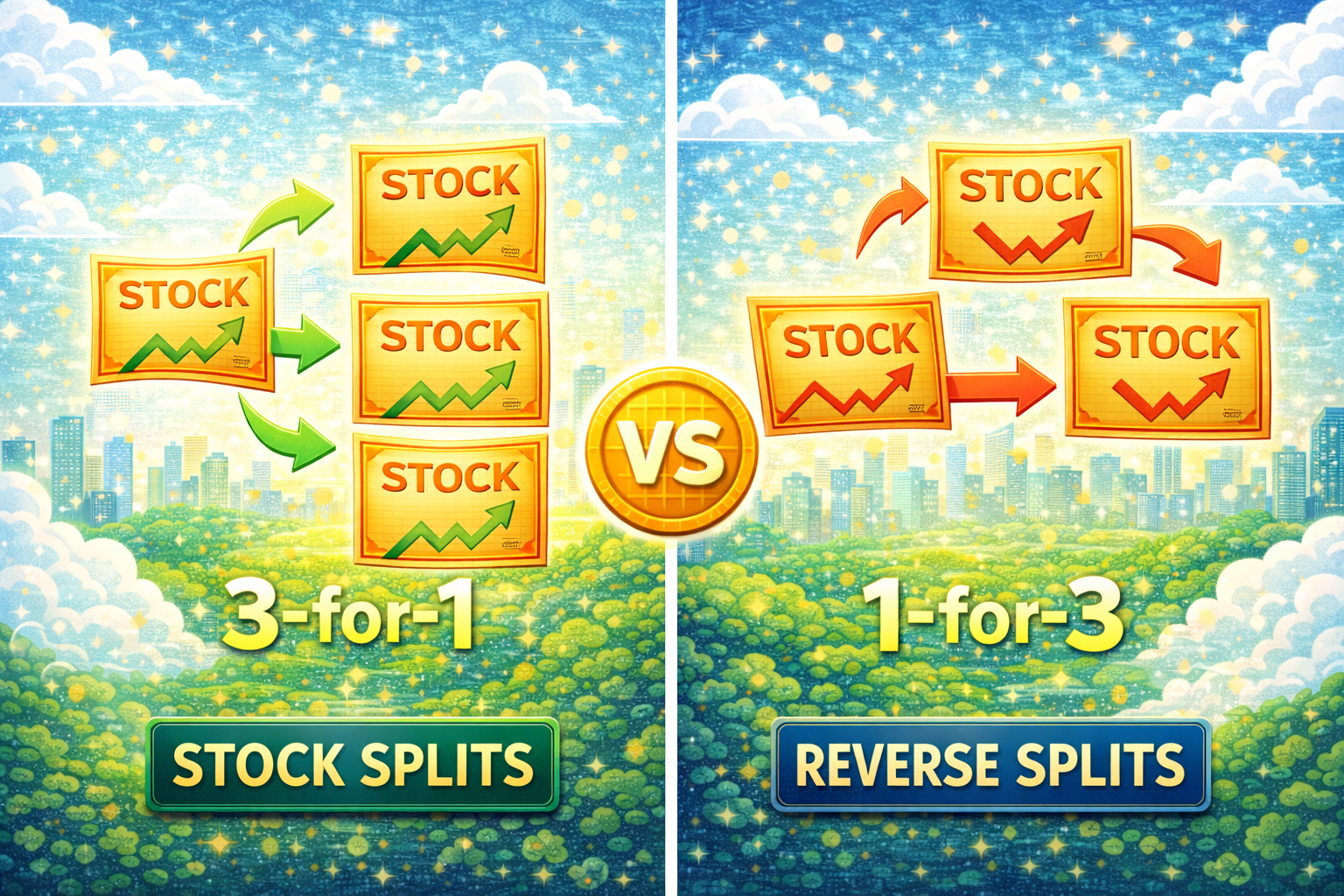
A stock split increases the number of shares and lowers the price per share in the same proportion.
Example: If you own 10 shares at $100 each and the company does a 2-for-1 stock split, you now own 20 shares at $50 each. Your total value is still $1,000. You have more shares, but each share is worth less.
Companies usually do stock splits when:
The share price has risen a lot.
They want the stock price to look more “affordable” to smaller investors.
They want to improve trading activity and liquidity (how easy it is to buy and sell).
A stock split does not automatically make the company more valuable. It mainly changes how the shares are divided.
What Is a Reverse Stock Split?
A reverse stock split reduces the number of shares and raises the price per share in the same proportion.
Example: If you own 20 shares at $5 each and the company does a 1-for-5 reverse split, you now own 4 shares at $25 each. Your total value is still $100. You have fewer shares, but each share is worth more.
Companies often do reverse splits when:
The share price has fallen a lot.
They want to avoid being delisted from an exchange with minimum price rules.
They want the stock to look “stronger” or more respectable in price.
A reverse split also does not magically fix a weak business. It just changes the share count and price.
How Do Splits Affect Investors?
Key points to remember:
Your total value stays about the same right after the split or reverse split.
A split that happens in a strong company can be a sign it has grown a lot in the past.
A reverse split may signal past trouble, but you still need to look at the actual business.
Splits can affect emotions. A lower price after a split may look “cheaper,” but the company is the same size. A higher price after a reverse split may look “healthier,” but the business may still have risks.
Takeaway
Stock splits and reverse splits change the number of shares and the price per share, not the basic value of your investment at the moment they happen. For beginners, the important thing is to focus on the company’s real business and risks, not just the new share count or price.
Not financial advice. Educational purposes only.