What Is an ETF (Exchange Traded Fund)?
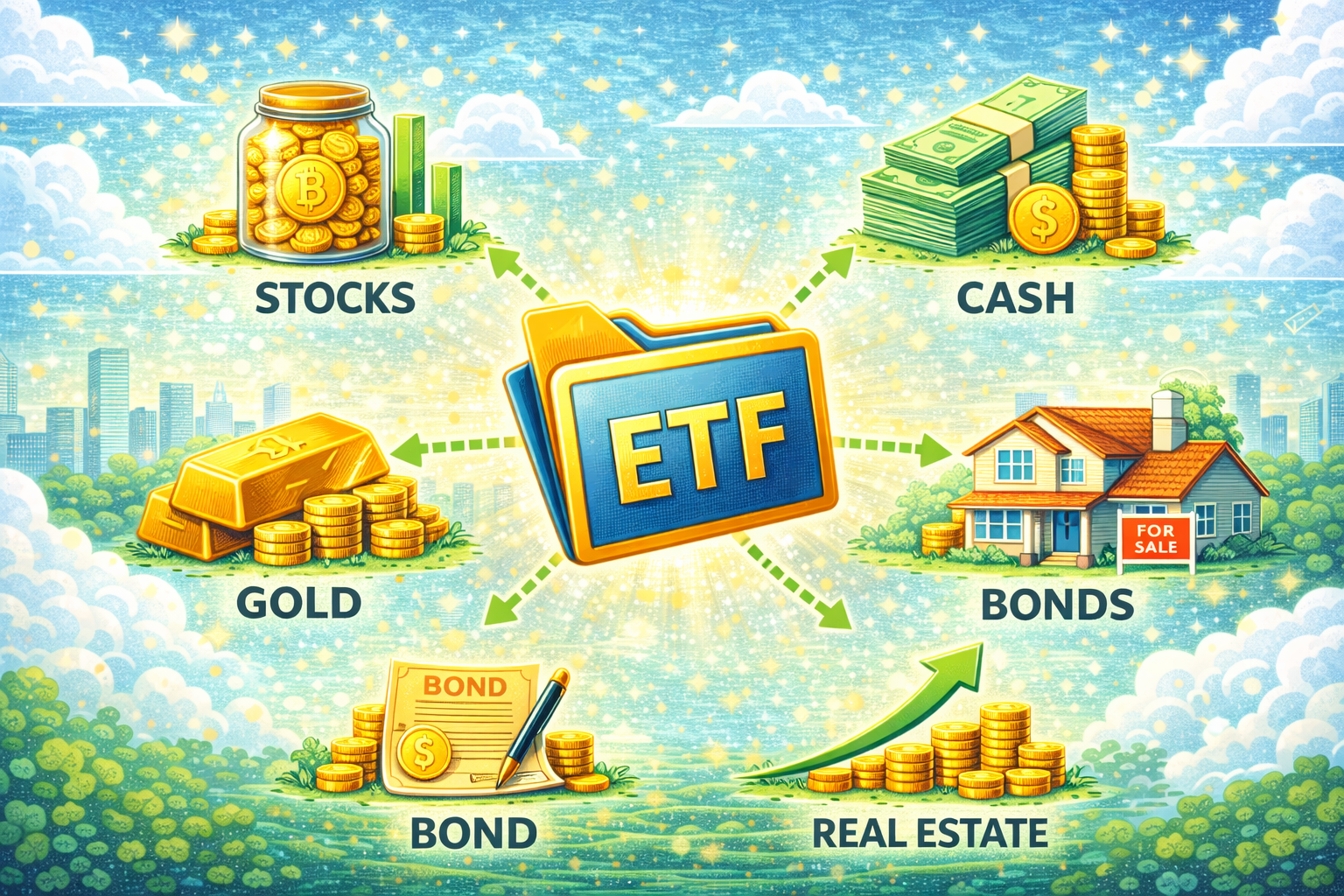
An ETF, or exchange traded fund, is a basket of investments you can buy and sell like a single stock. It might hold many stocks, bonds, or other assets inside one fund.
When you buy one share of an ETF, you are buying a small slice of everything the fund holds. For example, one ETF might hold 500 large U.S. companies. Another might hold government bonds or stocks from a certain country.
Think of an ETF like a pre-made basket at a grocery store. Instead of picking every item yourself, you grab one basket that already has a mix inside.
How ETFs Work
ETFs trade on stock exchanges during the day, just like individual stocks.
You can buy or sell ETF shares whenever the market is open.
The price changes throughout the day based on supply, demand, and the value of the underlying holdings.
Many ETFs aim to track an index, such as the S&P 500, by holding the same or similar mix of investments.
There are also actively managed ETFs, where a manager chooses what to buy and sell, but many beginner-focused ETFs are index-tracking.
ETFs for Beginners
ETFs can make investing simpler for beginners because they offer:
Potential benefits:
Diversification: One ETF can spread your money across many holdings.
Convenience: You buy one ticker instead of many individual stocks or bonds.
Usually lower fees: Many index ETFs have relatively low ongoing costs compared with some mutual funds.
Flexibility: You can trade them during the day in a regular brokerage account.
Key risks:
Market risk: If the market or sector the ETF tracks falls, the ETF can fall too.
Tracking differences: Some ETFs may not perfectly match their index.
Complex products: Leveraged or inverse ETFs can be very risky and are often not designed for beginners.
ETFs are tools. They are not risk free, and they can lose value.
Takeaway
An ETF is a basket of investments you can buy and sell like a single stock. It can give beginners an easy way to get diversification and broad market exposure in one trade. The key is to understand what is inside the ETF, what index or strategy it follows, what the fees are, and that all investments can go up or down in value.