Using Credit Cards Wisely vs Getting into Trouble
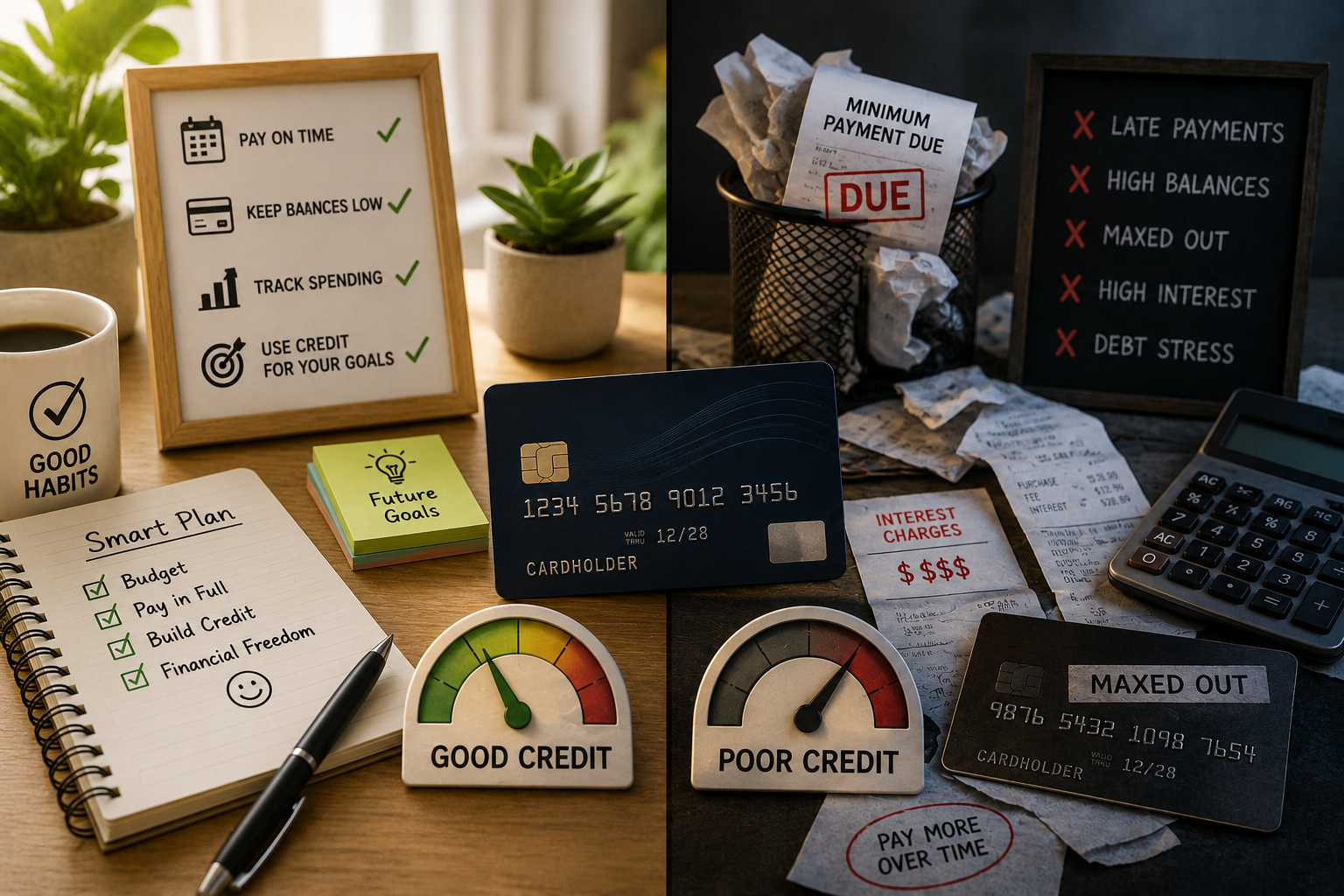
Credit cards can be useful tools, but they can also become expensive if they are not managed carefully. Using credit cards wisely means borrowing only what you can afford to repay and understanding the costs before they grow. Getting into trouble usually happens when balances build up, interest adds on, and minimum payments become the main payment plan.
What a Credit Card Really Is
A credit card is a short-term borrowing tool. When you use it, the card company pays the merchant, and you agree to pay the card company back.
If you pay your full statement balance by the due date, many cards do not charge interest. If you carry a balance, the card company charges interest based on your APR, or annual percentage rate. APR is the yearly cost of borrowing shown as a percentage.
Using Credit Cards Wisely
Credit cards can help when used with a clear plan.
Wise habits include:
Paying the full statement balance when possible.
Using the card for planned purchases, not impulse spending.
Checking the balance during the month.
Keeping track of due dates.
Reading the fees and interest terms.
For example, using a credit card for groceries and then paying it off in full can be manageable if that spending was already in your budget. The card is just the payment method, not extra money.
How People Get Into Trouble
Credit card trouble often starts slowly.
Common patterns include:
Buying things because the card makes them feel affordable.
Paying only the minimum payment month after month.
Using one card to cover gaps in income.
Forgetting about interest, late fees, or annual fees.
Letting several small balances turn into one large debt problem.
The danger is that credit cards make spending easy in the moment. The stress often comes later, when the bill arrives and the balance is larger than expected.
Why Minimum Payments Can Be Costly
A minimum payment is the smallest amount you must pay to keep the account current. Paying the minimum helps avoid late fees, but it may not reduce the balance much.
Part of the payment goes toward interest. Only what is left reduces the principal, which is the amount you actually borrowed. This can keep you in debt for a long time.
Practical Questions Before Using a Credit Card
Before swiping or clicking “buy,” ask:
Would I buy this if I had to pay cash today?
Can I pay this off by the due date?
Is this a need, a want, or a goal?
What happens if an emergency comes up before the bill is due?
Am I using this card because it is convenient or because I am short on money?
Takeaway
Using credit cards wisely means treating them as a payment tool, not extra income. They can be helpful when balances are tracked and paid on time. Trouble starts when spending grows faster than repayment, so awareness and consistency matter more than perfection.
Not financial advice. Educational purposes only.