Short-Term vs Long-Term Capital Gains Explained
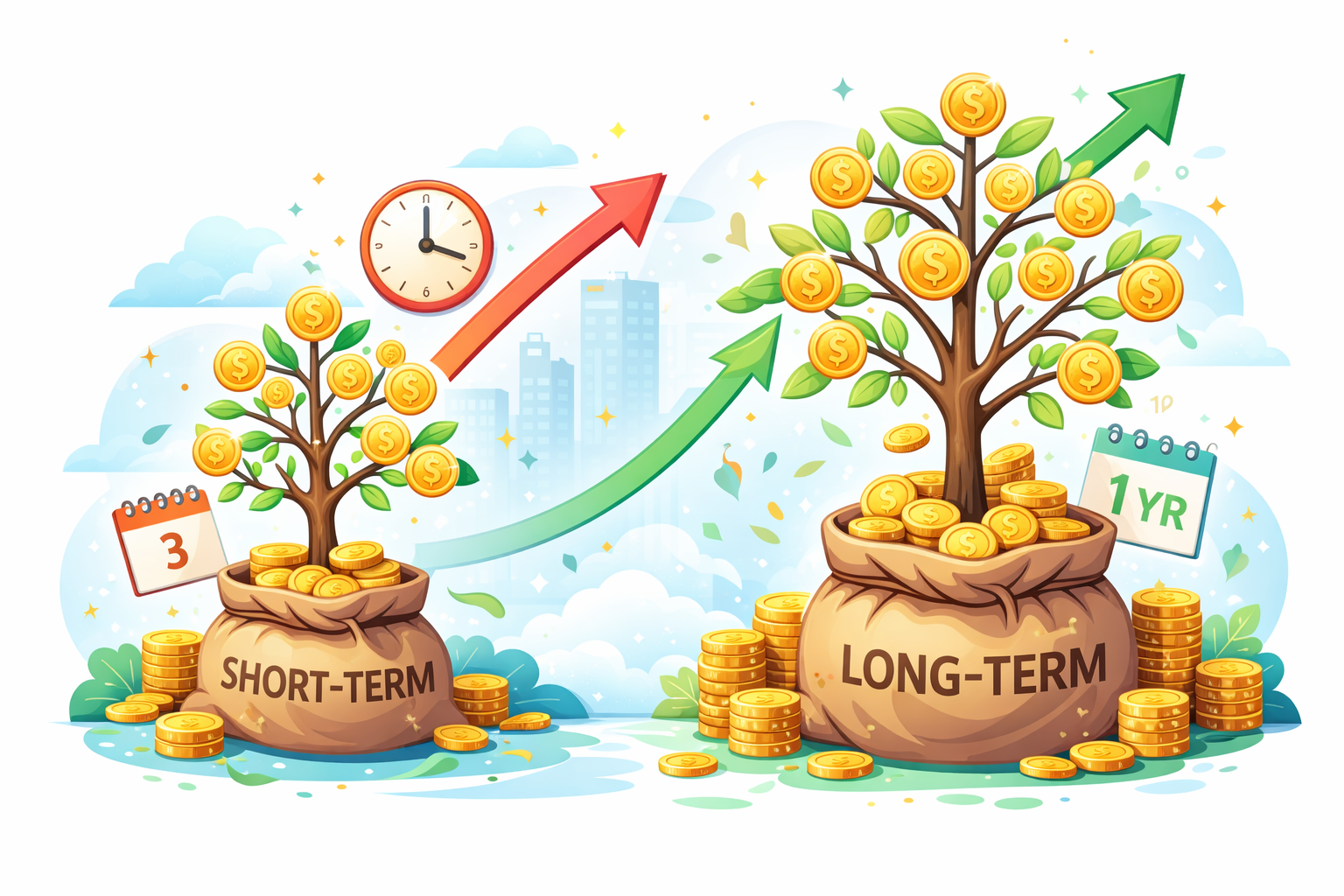
Short-term and long-term capital gains are two ways that profits from investments can be taxed. A capital gain is simply the profit you make when you sell an investment for more than you paid. Knowing the difference between short-term vs long-term capital gains matters because it affects how much tax you may owe on your investment returns.
What Is a Capital Gain?
A capital gain is the money you make when you sell something like a stock, fund, or piece of property for more than your purchase price. If you bought a stock for $50 and sold it for $70, your capital gain is $20. Capital gains are usually only “real” for tax purposes when you sell, not while the investment is just going up and down in value.
Short-Term Capital Gains
Short-term capital gains are profits on investments you held for one year or less before selling.
In many countries, including the United States, short-term gains are often taxed at your regular income tax rate. That means these gains may be treated like your salary or wages. Because of this, short-term gains can lead to higher taxes, especially if you trade often or are in a higher income bracket.
Short-term gains are common for active traders or people who buy and sell frequently to react to market moves.
Long-Term Capital Gains
Long-term capital gains are profits on investments you held for more than one year before selling.
In the U.S. and many other places, long-term gains often receive more favorable tax treatment than short-term gains. The idea is to reward patient, long-term investing. Exact tax rates depend on your country’s rules, your income level, and current tax laws, which can change over time.
Long-term gains are more common for investors who buy and hold for several years, such as those focused on retirement or long-term goals.
Why This Matters
Short-term vs long-term capital gains can influence how you think about holding periods and trading frequency.
More short-term trades can mean:
More chances for profit.
But also more taxes and more emotional decision-making.
Longer holding periods can mean:
Potentially lower tax rates (depending on your country’s rules).
But also more exposure to market ups and downs over time.
You do not control what the market does, but you do control how often you trade and how long you hold.
Takeaway
Short-term vs long-term capital gains mainly comes down to how long you hold an investment before you sell. Short-term gains are usually taxed more like regular income, while long-term gains often get more favorable tax treatment. It is important to learn your local tax rules, think about your time horizon, and remember that investments can go up or down in value.
Not financial advice. Educational purposes only.