Emergency Fund and Why It Usually Comes Before Investing
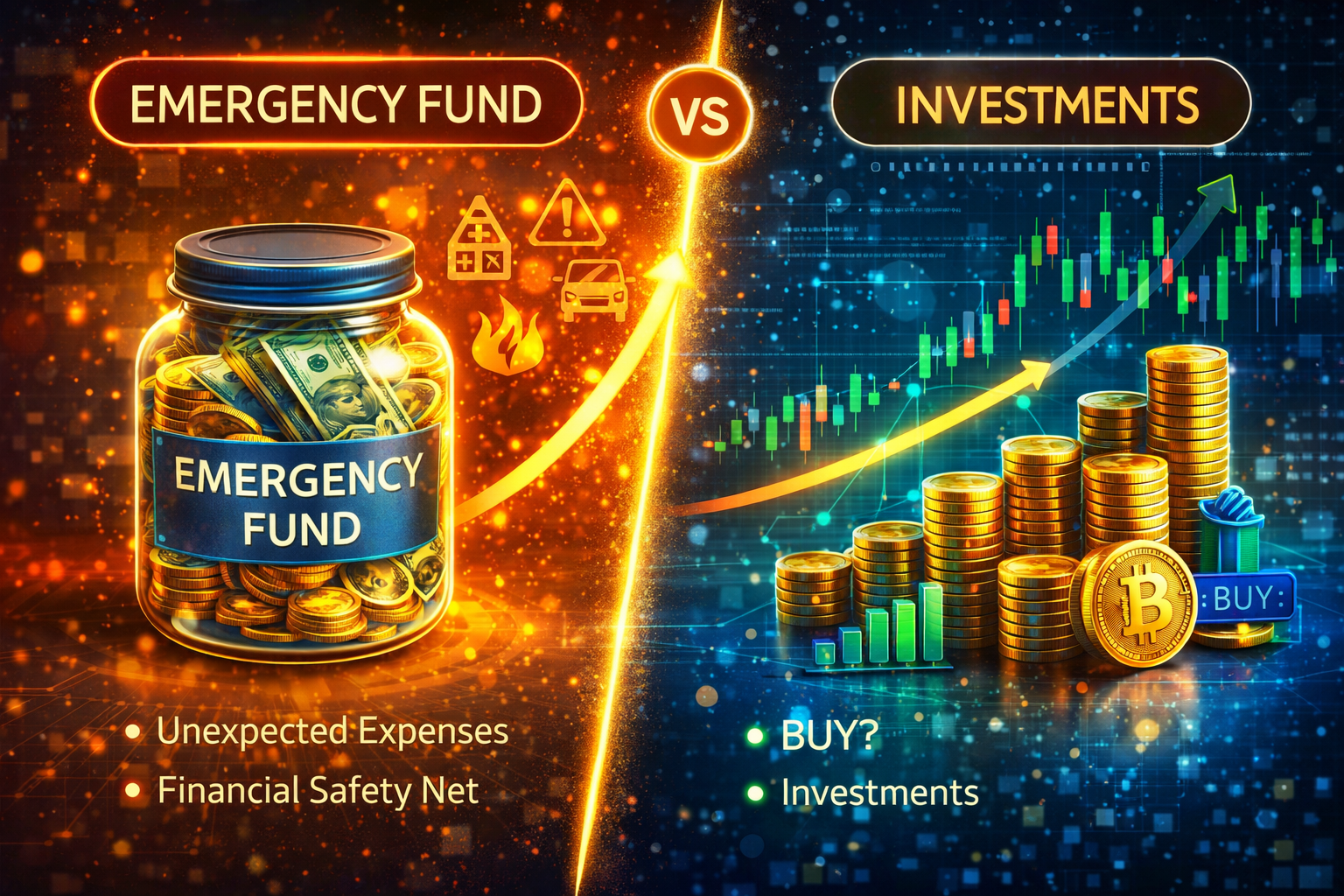
Before many people start investing, they first build an emergency fund. An emergency fund is money set aside for surprise expenses or sudden income loss. Understanding why an emergency fund usually comes before investing helps beginners see the difference between building a financial safety net and taking market risk.
What Is an Emergency Fund?
An emergency fund is money saved for unexpected problems, not regular spending. Common examples include:
Car repairs
Medical bills
Home repairs
Job loss or reduced work hours
Emergency travel or family needs
This money is usually kept in cash or a very safe account that is easy to access. The goal is not high growth. The goal is stability and quick access when life goes wrong.
Why It Usually Comes Before Investing
Investing means putting money into assets like stocks, bonds, or funds that can rise and fall in value. Over time, investing may help money grow, but in the short term, prices can drop. That is why an emergency fund usually comes first.
If you invest money and then have an emergency, you may be forced to:
Sell investments at a bad time
Lock in losses
Use credit cards or loans if the money is not available
An emergency fund helps protect you from that situation. It gives you a cash cushion so your investments do not need to become your emergency plan.
Where People Usually Keep an Emergency Fund
Because emergency money needs to be easy to reach, people often keep it in:
A savings account
A high-yield savings account
A money market account
These options usually offer lower returns than long-term investments, but they are designed for access and lower risk. That tradeoff matters. Emergency money is there to be ready, not to chase the highest return.
Benefits and Limits
Potential benefits of an emergency fund:
Reduces the need to take on high-interest debt
Lowers the chance of selling investments in a downturn
Creates more peace of mind
Makes long-term investing easier to stick with
Limits and tradeoffs:
Cash savings usually grow more slowly than long-term investments
Inflation can reduce the buying power of cash over time
Keeping too much in cash for too long may slow overall growth
So the idea is not that saving is “better” than investing. It is that they do different jobs.
Why This Matters
For beginners, investing can feel exciting, but investing without a safety cushion can create extra stress. An emergency fund supports the basics first. Then investing can be approached with a longer time horizon and more patience.
Takeaway
An emergency fund is a cash cushion for unexpected problems. It usually comes before investing because it helps you handle emergencies without debt or forced selling. For beginners, that safety net can make investing more stable, more practical, and easier to stick with over time.
Not financial advice. Educational purposes only.