What Is Diversification and Why Investors Talk About It Constantly
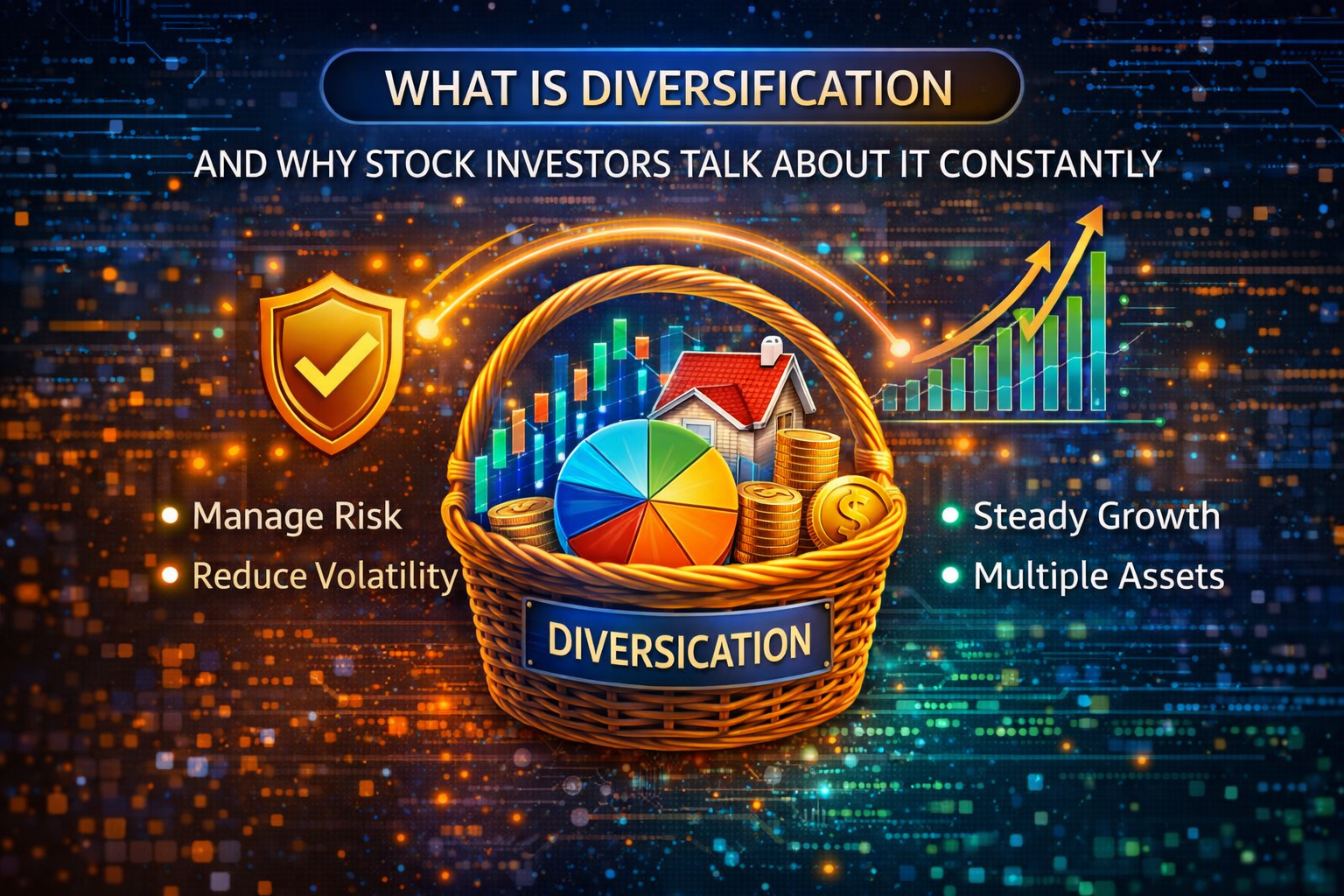
Diversification is one of the most common ideas in investing. You will hear it in articles, podcasts, fund descriptions, and financial conversations all the time. Understanding what diversification is helps beginners see why investors spread money across different investments instead of relying too heavily on just one.
What Is Diversification?
Diversification means spreading your money across different investments so your results do not depend too much on any one company, sector, or asset.
The basic idea is simple: if one investment does poorly, others may do better or fall less. That can reduce the damage from putting too much money in one place. A simple example:
Owning only one stock means your outcome depends heavily on that one company
Owning a fund with hundreds of stocks spreads that risk across many companies
Diversification does not guarantee profits, and it does not prevent losses. It is a risk management idea, not a promise.
Why Investors Talk About It So Much
Investors talk about diversification constantly because it helps manage a problem called concentration risk.
Concentration risk means too much of your money is tied to one investment or one area of the market. If that area struggles, your portfolio can take a bigger hit.
For example, someone who owns…
Only one stock
Only technology stocks
Only stocks from one country
…may face more risk than someone who spreads money more broadly. Diversification is one way to avoid having one mistake, one industry problem, or one market event do too much damage.
Different Ways to Diversify
Investors can diversify in several ways:
Across companies: Owning many companies instead of just one or two
Across sectors: Spreading money across areas like technology, healthcare, finance, and consumer goods
Across asset classes: Mixing stocks, bonds, cash, real estate funds, and other asset types
Across regions: Holding investments from more than one country or market
These layers can help reduce the effect of one specific problem.
Benefits and Limits
Potential benefits of diversification:
Reduces reliance on one investment
Can smooth out portfolio swings over time
Makes one bad result less damaging
Limits and risks:
Diversification does not stop market-wide losses
A diversified portfolio can still fall in a recession or bear market
Too much complexity can make a portfolio harder to understand
In short, diversification can lower some risks, but it cannot remove all of them.
Why It Matters for Beginners
Beginners often focus on finding the “best” stock or fund. Diversification shifts the focus toward building a mix that can better handle uncertainty. Since no one can predict every winner or problem ahead of time, diversification is one way to be less wrong when markets surprise you.
Takeaway
Diversification means spreading your money across different investments so you are not depending too much on any one idea, company, or part of the market. Investors talk about it constantly because it helps reduce concentration risk and can make a portfolio more resilient over time. For beginners, it is one of the simplest and most important risk management ideas to understand.
Not financial advice. Educational purposes only.