Understanding Return: Nominal vs Real
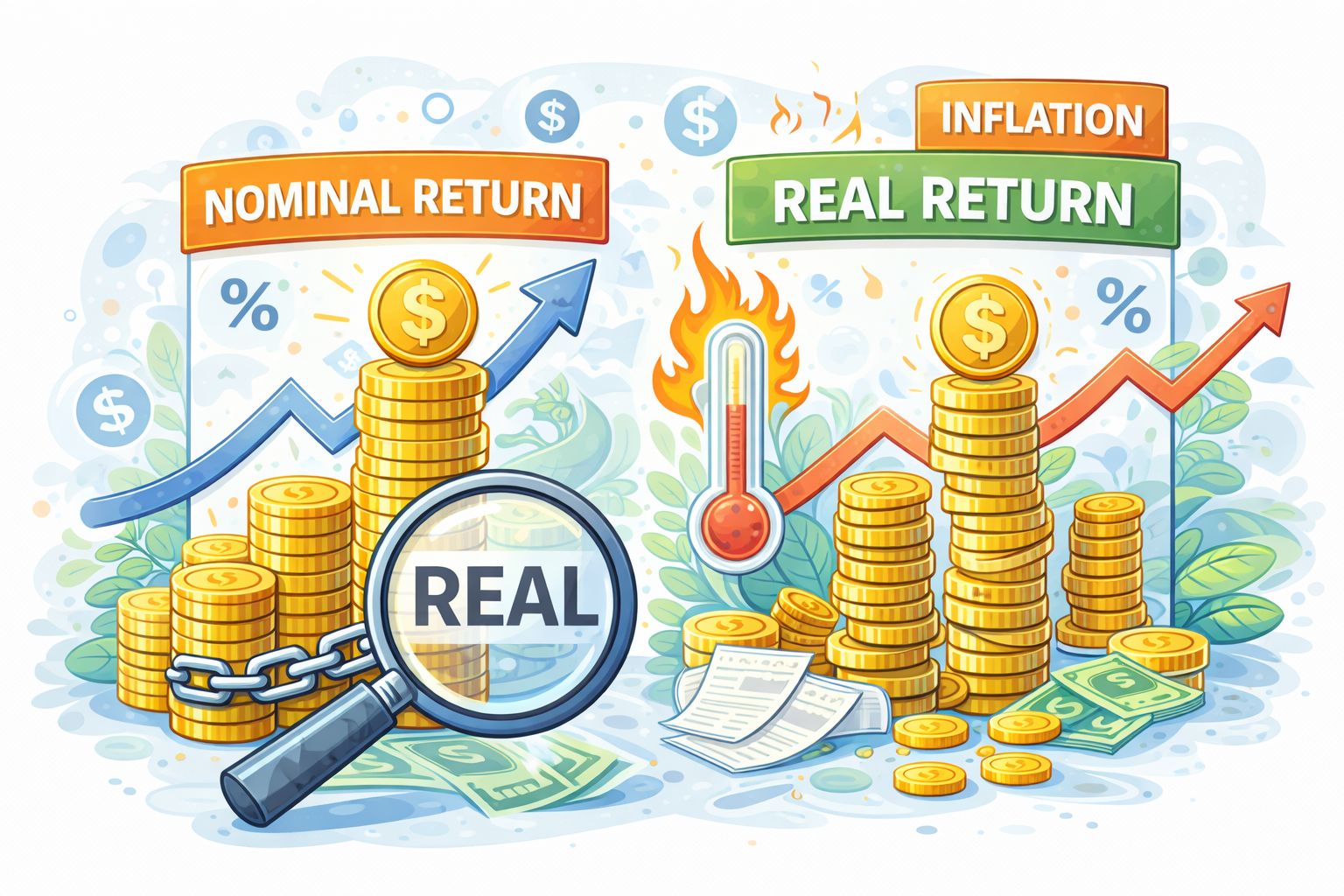
When people talk about “return” on an investment, they often mean how much money they gained or lost over time. But there are two key versions of return: nominal and real. Understanding nominal vs real return after inflation helps you see the difference between money on paper and what that money can actually buy.
What Is Nominal Return?
A nominal return is the simple percentage change in your investment before considering inflation. If you invest $1,000 and it grows to $1,080 in one year, your nominal return is 8%. This is the number you usually see on statements and in headlines. Nominal return is useful, but it does not tell the whole story.
What Is Inflation?
Inflation is the general rise in prices over time. When inflation is 3% in a year, it means that on average, many goods and services cost about 3% more than they did a year ago. Inflation reduces purchasing power, which is how much your money can actually buy.
What Is Real Return (After Inflation)?
A real return is your investment return after adjusting for inflation. It answers the question: “How much did my buying power really grow?”
A simple way to think about it is: Real return ≈ Nominal return − Inflation rate
This is an estimate, but it is close enough for basic understanding.
A Simple Example
You earn an 8% nominal return on an investment.
Inflation for the year is 3%
= Your approximate real return is: 8% − 3% = 5% real return.
On paper, your money grew by 8 percent. In terms of what it can buy, it grew by about 5 percent. If inflation had been 9 percent, your real return would be roughly negative 1 percent, even though your nominal return was positive.
Why This Matters
Looking only at nominal returns can make investments seem better than they are. High inflation can quietly eat away at gains. Understanding real return helps you:
Think in terms of long-term purchasing power, not just account balances.
Compare different investments during different inflation periods.
Remember that “earning something” may still mean losing ground after inflation.
No investment is risk free, and real returns can be negative, especially during high inflation or market downturns.
Takeaway
Nominal return shows how much your money grew on paper. Real return looks at how much your buying power grew after inflation. For beginners, learning to focus on real return helps set more realistic expectations and reminds you that all investments can go up or down in both nominal and real terms.
Not financial advice. Educational purposes only.